

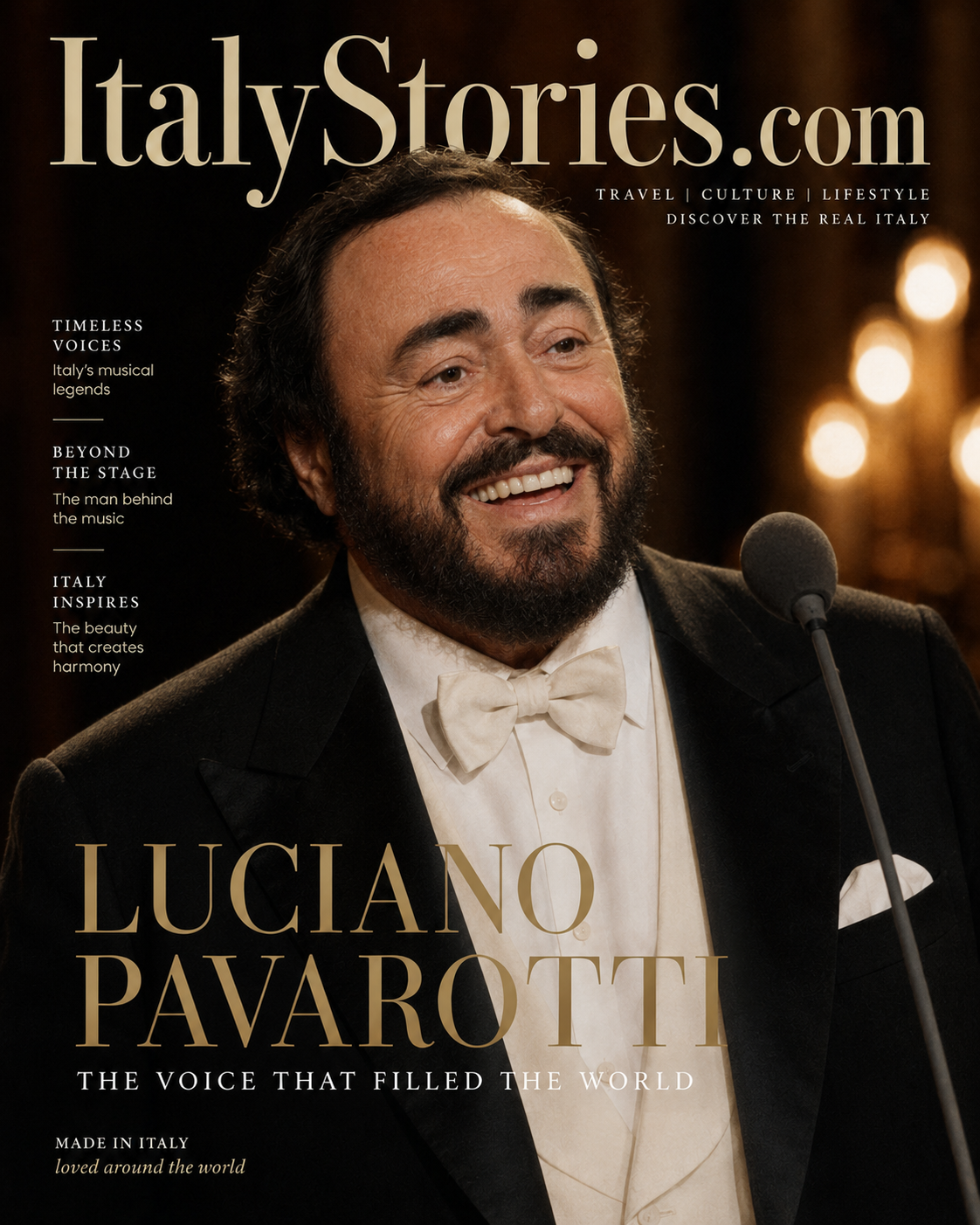
The Night Opera Met the World Cup On the evening of July 7, 1990, the Baths of Caracalla in Rome became the setting for a cultural collision that nobody had fully planned and almost nobody could have predicted. Italy was hosting the FIFA World Cup. The final between West Germany and Argentina would be played the following day. Football had taken over television schedules, newspapers, bars, family conversations and public squares. In Britain, the BBC had chosen an operatic aria as the musical theme of its tournament coverage: “Nessun dorma,” from Giacomo Puccini’s Turandot, sung by Luciano Pavarotti. Then Pavarotti walked onto a Roman stage with José Carreras and Plácido Domingo. The Three Tenors concert was originally conceived as a special event, partly connected with raising money for the leukemia foundation supported by Carreras after his recovery from the disease. Zubin Mehta conducted orchestras from Florence and Rome. The program mixed opera with Neapolitan song and popular melodies. The three singers joked, competed, listened to one another and eventually joined voices in music that millions of viewers would soon associate with a new idea of classical music: serious, spectacular and unexpectedly accessible. When Pavarotti sang “Nessun dorma,” the aria’s final cry of victory seemed almost designed for a football tournament, even though Puccini had written it more than six decades earlier for a very different dramatic situation. Later, when all three tenors returned to it together, the moment became television history. The resulting recording became, according to Decca and Guinness-recognized accounts, the best-selling classical album of its kind and one of the most commercially successful classical releases ever. Estimates of the worldwide television audience vary, but the scale was enormous. Opera had moved from the opera house to the stadium age. For Pavarotti, it was not the beginning of fame. By 1990 he had already spent nearly thirty years in the profession, conquered the Metropolitan Opera, sung at La Scala, worked with Joan Sutherland and Herbert von Karajan, accumulated major recordings, and become famous for high notes that seemed to arrive without effort. But the summer of Italia ’90 changed the meaning of his fame. He was no longer merely one of the world’s most celebrated tenors. He became a face and a voice recognized by people who had never bought an opera ticket. To understand how improbable that transformation was, one has to go back to Modena, to a baker who loved singing, a boy fascinated by football and records, and a family that did not expect its son to become the most famous operatic tenor of his era. Modena: A Baker’s Son, a Choir and a Dream Luciano Pavarotti was born in Modena on October 12, 1935. He remained attached to the city throughout his life, even after his career made airports, hotels and international stages part of his routine. His father, Fernando Pavarotti, worked as a baker and sang tenor in the Corale Rossini, a respected local choir. Fernando possessed an attractive voice but, according to family accounts, lacked the temperament for a solo career because of severe stage fright. What he did give his son was something more durable: the idea that singing could be part of ordinary life. Music was present in the Pavarotti home through records and radio. Luciano listened to the great tenors who had created the modern mythology of Italian singing – Enrico Caruso, Beniamino Gigli, Tito Schipa, Giuseppe Di Stefano and others. These were not remote museum figures. Their records were practical lessons in diction, phrasing, breath and style. The other great passion of his youth was football. Pavarotti was an enthusiastic goalkeeper and remained a devoted follower of the sport long after opera took over his life. The connection would become strangely prophetic. Decades later, football would help transform “Nessun dorma” into his most famous calling card. As a teenager, he began singing in the Corale Rossini beside his father. In 1955 the choir traveled to the International Musical Eisteddfod in Llangollen, Wales, and won first prize in the male choir category. Pavarotti was nineteen. He was still one voice among many, but the experience mattered. For a young man from postwar Modena, traveling abroad and winning a respected international competition gave performance a new scale. He did not immediately choose the insecure life of a singer. He trained as a teacher and worked briefly in education; he also sold insurance. These jobs were not romantic episodes inserted into the biography after the fact. They reflect the practical reality of an Italian family trying to make a sensible decision about a son with musical ambition. Singing required years of study with no guarantee of employment. Opera could be a magnificent dream and a terrible career plan. Pavarotti nevertheless persuaded his family to let him try seriously. His first important teacher was Arrigo Pola, a tenor who concentrated on fundamentals rather than flashy repertoire: scales, legato, articulation, breath and the ability to sustain a phrase evenly. When Pola left Italy in 1957, Pavarotti continued his studies with Ettore Campogalliani in Mantua. Among Campogalliani’s students was Mirella Freni, another young singer from Modena. Freni and Pavarotti had known each other since childhood; their mothers had worked in the same tobacco factory, and the two singers would later joke about a family story that they had even shared a wet nurse. More important was the artistic bond. They traveled to lessons, grew into major careers at roughly the same time, and would eventually create one of the most beloved recorded partnerships in Puccini. Pavarotti’s years of study were patient. He was not an overnight prodigy launched at nineteen. By the time the professional door opened, he was twenty-five and had built the technical base that would make his best singing seem astonishingly easy. April 1961: Rodolfo Opens the Door In 1961 Pavarotti won the Achille Peri singing competition in Piacenza. The victory led to his professional operatic debut as Rodolfo in Puccini’s La bohème at the Teatro Municipale in Reggio Emilia on April 29. Rodolfo could hardly have been a more suitable first major role. He is young, romantic, impulsive and lyrical. His great first-act aria, “Che gelida manina,” rises from conversational tenderness to a radiant high climax. It requires warmth, clear Italian, secure breath and the illusion that singing is simply what happens when emotion becomes too large for speech. Those qualities would become central to Pavarotti’s identity. The early 1960s were a good moment for a young Italian tenor with genuine technique. Europe still possessed a dense network of opera houses, touring companies and regional seasons where singers could learn on stage. Pavarotti moved through theaters in Italy and abroad, singing roles such as Rodolfo, Alfredo in La traviata, the Duke of Mantua in Rigoletto, Edgardo in Lucia di Lammermoor and Pinkerton in Madama Butterfly. He sang in places including Belgrade, Amsterdam, Vienna, Dublin and London. The career did not explode at once. It expanded through substitutions, recommendations and the old operatic economy of being ready when someone else became unavailable. One such opportunity brought him to the Royal Opera House, Covent Garden, where he replaced Giuseppe Di Stefano as Rodolfo in 1963. British audiences heard a singer who was still developing but already possessed the qualities that would define him: a bright, focused tone, unusually clear words and an upper register that did not sound separated from the rest of the voice. In 1964 he made his first recordings for Decca, beginning a relationship that would continue across more than four decades and preserve an extraordinary percentage of his repertory. The recording studio was ideal for Pavarotti. His voice had glamour, but also detail. The microphone could capture the slight softening of a consonant, the bloom of a vowel and the way he could carry a phrase forward without making the breath mechanism audible. Then came the partnership that accelerated everything. Joan Sutherland and the School of Bel Canto Joan Sutherland was already one of the great sopranos of the age when Pavarotti began working with her. With her husband and conductor Richard Bonynge, she stood at the center of the twentieth-century revival of bel canto opera – especially works by Bellini and Donizetti that demanded extreme vocal agility, long phrases and fearless high notes. Pavarotti first appeared with Sutherland in the mid-1960s and made his American debut in Miami in 1965 opposite her in Lucia di Lammermoor. That year he also toured Australia with the Sutherland-Williamson company. The Australian tour became one of the formative periods of his career. Pavarotti later credited Sutherland with helping him understand breath support in a more physical, practical way. The story has been told humorously – the young tenor observing or even placing his hands near her diaphragm to understand how she managed the breath – but its importance was serious. Bel canto exposed every weakness. There was nowhere to hide behind a large orchestra. A singer needed exact pitch, clean line, flexibility and the confidence to move repeatedly into the highest part of the voice. Sutherland and Bonynge also helped direct Pavarotti toward repertoire that suited his instrument exceptionally well. Donizetti’s L’elisir d’amore became one of his signature operas. Nemorino, the shy country boy who believes a cheap bottle of wine is a magic love potion, matched Pavarotti’s combination of vocal beauty and comic warmth. “Una furtiva lagrima” allowed him to do what he did best: reduce the scale, float a phrase and make a simple emotion feel suddenly immense. With Sutherland he recorded and performed Lucia di Lammermoor, I puritani, La fille du régiment and other works that helped restore nineteenth-century Italian vocal style to mainstream audiences. The partnership was not based on theatrical realism. Both singers were primarily vocal artists. The drama lived in rhythm, color, phrasing and the physical pleasure of difficult music being sung securely. That security would soon produce the performance that turned Pavarotti into a legend in New York. Nine High Cs and Seventeen Curtain Calls On February 17, 1972, the Metropolitan Opera presented a new production of Donizetti’s La fille du régiment. Joan Sutherland sang Marie. Richard Bonynge conducted. Pavarotti was Tonio. The opera contains one of the most notorious tenor showpieces ever written: “Ah! mes amis,” an aria whose climactic section demands nine high Cs. For a tenor, the high C is not simply another note. It sits at the edge of the conventional heroic upper range, in an area where pressure, vowel, breath and resonance must be balanced with ruthless precision. A singer can reach it and still sound terrified. The real miracle is to make it belong to the phrase. Pavarotti produced the succession of Cs with brilliance and apparent ease. The Met audience erupted. Accounts from the evening record seventeen curtain calls, and the nickname “King of the High Cs” became inseparable from him. The moment is often treated as a circus feat, but that misses the point. The notes mattered because the rest of the voice was so well coordinated. Pavarotti did not seem to climb toward the high C by changing into a different instrument. The tone remained recognizably his. The 1972 triumph also shows how opera fame worked before social media. One performance, described by critics and repeated through recordings, broadcasts and word of mouth, could change an artist’s international status. Pavarotti was already respected. After La fille du régiment, he became an event. His relationship with the Metropolitan Opera would be unusually long. He made his company debut there in La bohème in 1968 and ultimately appeared around 378 times across a thirty-six-year relationship, singing twenty roles. Cavaradossi in Tosca became his most frequently performed Met role, with sixty appearances, including his farewell from the company in 2004. The Met was not merely another prestigious address. It became one of the principal stages on which the world watched Pavarotti age from brilliant young lyric tenor into global institution. What Was Actually Special About the Voice? Pavarotti is sometimes remembered as if his entire technique consisted of high notes and volume. In reality, the most distinctive qualities were subtler. He possessed a lyric tenor of unusual brightness and carrying power. The core of the sound was clean rather than heavily darkened. His Italian vowels remained open and intelligible. The consonants rarely broke the legato line. At his best, the top of the voice seemed to grow naturally from the middle rather than being pushed onto it. That matters because the tenor voice must negotiate a difficult transition area – the passaggio – as it rises. Poorly managed, the sound can spread, tighten or lose resonance. Pavarotti’s early training gave him a particularly elegant way through that transition. Listeners often described the result as effortless, although the apparent ease was the product of disciplined coordination. His diction was equally important. In Italian opera the text and the melodic line are inseparable. Pavarotti could make a word clear without chewing it to pieces. A phrase such as “Che gelida manina” retained the natural shape of speech while remaining fully sung. He was also exceptionally skilled at dynamic contrast. The popular image is the enormous final “Vincerò!” of “Nessun dorma,” but some of his most revealing singing occurs at lower volume. In La bohème, L’elisir d’amore and the Verdi Requiem, he could thin the sound without making it weak, creating the impression of intimacy even in a large hall. His limitations were real. Pavarotti was not a theatrical chameleon. He was never known for the kind of restless dramatic transformation associated with Plácido Domingo. He concentrated largely on Italian and French lyric repertoire and was cautious about moving too far into Wagnerian or Slavic worlds. His stage acting could appear broad or static, especially beside colleagues who were more natural actors. But the narrowness of the repertory was partly a form of intelligence. For much of his career he understood what his voice did best. When he eventually moved into heavier Verdi parts such as Manrico in Il trovatore and Radamès in Aida, the instrument acquired darker colors, but the fundamental production remained lyric. In 1991 he even took on Otello in concert performances with Georg Solti – a fascinating experiment precisely because it lay outside the territory most naturally associated with him. Pavarotti’s great lesson was that vocal personality does not require distortion. He sounded unmistakably like himself because he allowed the natural instrument to remain natural. Freni, Karajan, Bonynge and the Recordings That Built a Legacy A singer’s historical reputation depends partly on what remains after the applause stops. Pavarotti was fortunate to work during the golden age of the long-playing opera recording, and his relationship with Decca documented his voice in extraordinary detail. Mirella Freni was one of the central partners in that recorded legacy. Their shared Modenese background gave the public a romantic narrative, but the musical relationship is what endured. In La bohème, especially in the famous recording conducted by Herbert von Karajan with the Berlin Philharmonic, their voices complement each other almost ideally: Freni’s warm, youthful Mimì against Pavarotti’s shining Rodolfo. Karajan understood how to surround a singer with orchestral luxury without burying the voice. In the recording studio, that allowed Pavarotti to use half-tones and delicate phrasing that would have been difficult to risk in less sympathetic acoustic conditions. Richard Bonynge, by contrast, helped shape Pavarotti’s bel canto identity. With Joan Sutherland, he created the environment for the tenor to master a style where elegance and agility were not decorative extras but the architecture of the music. Other conductors brought out different qualities: James Levine became one of his most important Metropolitan Opera collaborators; Zubin Mehta would later conduct the first Three Tenors concert; Georg Solti challenged him in Verdi and concert repertory; Claudio Abbado, Riccardo Muti, Carlos Kleiber, Lorin Maazel, Riccardo Chailly and others placed him inside very different musical traditions. The discography became enormous: complete operas, recital albums, sacred music, Neapolitan songs and live concerts. His worldwide record sales are often reported above 100 million, although published totals differ and should be treated as estimates rather than a single uncontested number. What is not in dispute is the reach. Pavarotti became one of the most commercially successful classical recording artists in history. The recordings also preserved a contradiction at the heart of his art. He was a huge public personality, yet the best of his studio work is often intimate. The famous smile, beard, handkerchief and physical presence disappear. What remains is breath moving through language. The White Handkerchief and the Art of Being Recognizable Pavarotti’s visual identity became nearly as famous as his sound. The dark beard. The dinner jacket. The enormous smile. The white handkerchief held in one hand during recitals. The handkerchief began less as branding than as a practical solution. During his international recital debut at William Jewell College in Missouri in 1973, Pavarotti was nervous and had been dealing with a cold. He held a handkerchief partly because he needed it and partly because he did not know what to do with his hands. The gesture stayed. Over time, it became a perfect stage object. It gave a physically large singer something small and movable to focus the audience’s eye. It could wipe sweat, mark a gesture, punctuate a joke or simply reassure him that his hands had somewhere to go. Pavarotti understood instinctively that communication begins before the first note. He did not cultivate aristocratic distance. He laughed, spoke directly, made audiences feel welcomed and often behaved as though the concert were a meeting between people rather than a ritual in which the public should be intimidated by culture. This mattered increasingly as his career moved beyond opera houses. In 1977, a La bohème from the Metropolitan Opera conducted by James Levine became the first live telecast in the Met’s long-running television series and reached a vast audience. Television revealed Pavarotti’s greatest non-vocal asset: the camera liked him. His face registered emotion simply and immediately. By the 1980s and 1990s, the scale of his concerts had become almost absurd by classical standards. In 1991 he sang in London’s Hyde Park before roughly 150,000 people while torrential rain soaked both the audience and distinguished guests including the Prince and Princess of Wales. In June 1993, more than half a million people gathered on the Great Lawn of New York’s Central Park for another open-air concert, according to the Pavarotti Foundation. These were not conventional opera performances. They were mass gatherings built around an operatic voice. That distinction would change the economics and public image of classical singing. “Nessun dorma”: How an Aria Became a Global Anthem “Nessun dorma” comes from the final act of Puccini’s Turandot. Calaf, the unknown prince, believes that by dawn he will win the princess Turandot. The aria begins in nocturnal stillness and ends in certainty: “Vincerò” – I will win. Pavarotti recorded the role of Calaf in the 1970s, but Turandot was not a central stage role for him in the way Rodolfo or Nemorino was. “Nessun dorma,” however, fitted his voice perfectly as a concert aria. Its arc moves from lyrical concentration to a blazing upper climax, exactly the trajectory his instrument could make feel inevitable. The 1990 World Cup transformed the aria from an opera favorite into a piece of global popular culture. The BBC’s use of Pavarotti’s recording during its football coverage was crucial. The melody became associated with slow-motion goals, Italian nights, tension and victory. Listeners who did not know Turandot knew the music. Many who could not translate the text understood the emotional direction without translation. Then the Three Tenors concert gave the association a human image: Pavarotti, Carreras and Domingo in evening dress, smiling beneath the Roman sky. The Three Tenors continued with major concerts in Los Angeles in 1994, Paris in 1998 and Yokohama in 2002, alongside other appearances. The original Rome album won a Grammy and became a record-breaking classical bestseller. Critics sometimes objected that these events reduced opera to greatest hits. The criticism was not entirely unreasonable. The format favored famous arias, spectacle and recognizable melodies rather than complete dramatic works. But something else happened at the same time. Millions of people learned the names Puccini, Verdi, Carreras, Domingo and Pavarotti without entering an opera house. Some stopped there. Others went further. Pavarotti had always believed that opera should not belong only to specialists. The Three Tenors turned that belief into a commercial phenomenon. Pavarotti & Friends: The Tenor Walks Into Pop Music If the Three Tenors irritated some classical purists, Pavarotti & Friends went further. Beginning in the 1990s, annual benefit concerts in Modena placed Pavarotti beside artists from rock, pop, soul and world music. Over the years the stages included performers such as Bono and U2, Sting, Elton John, Eric Clapton, James Brown, Mariah Carey, Céline Dion, Stevie Wonder, Brian May, Zucchero, Eros Ramazzotti, the Spice Girls and many others. The musical results were deliberately unpredictable. A trained operatic tenor and a rock singer do not share the same microphone technique, vibrato, phrasing or dynamic assumptions. Sometimes the contrasts were awkward. Sometimes they were electric. Pavarotti did not pretend that pop and opera were the same language. He seemed interested precisely because they were different. The most important point was humanitarian. The concerts raised money for children and refugees affected by war and displacement. His work with the United Nations refugee agency became substantial rather than ceremonial. UNHCR records that Pavarotti & Friends concerts supported projects for refugees from Kosovo, Afghanistan, Angola and Iraq, and that donations connected with the concerts raised more than seven million U.S. dollars for refugee projects over the years. In 1998 he became a United Nations Messenger of Peace. In 2001 UNHCR awarded him the Nansen Refugee Award, noting that at the time he had raised more money for the agency than any other private individual. This part of his career altered the meaning of crossover. It was not merely a way to sell classical singing to pop audiences. The collision of celebrity worlds became a fundraising machine. It also brought Pavarotti home. The events were staged in Modena, the city where the baker’s son had first imagined a life in music. Success, Criticism and the Problem of Becoming a Monument Superstardom creates a strange danger for a classical singer. The public begins buying the person as much as the performance. By the 1990s, Pavarotti could fill arenas almost anywhere. His name alone was a brand. There were lucrative concert tours, television specials, public appearances and enormous expectations. The same qualities that made him accessible – warmth, informality, willingness to sing familiar favorites – made some critics suspicious. There were legitimate artistic criticisms. As he aged, the voice lost some of its old freedom. He canceled performances with increasing frequency, sometimes provoking resentment from theaters and audiences. He could be reluctant to rehearse. His physical size and health complicated stage movement. Some later performances relied on the memory of what the voice had been, rather than the extraordinary security of the 1960s and 1970s. His adventures in heavier repertoire were not always equally successful. A lyric tenor who becomes world-famous faces pressure to sing everything associated with heroic tenordom. Pavarotti sometimes moved toward roles that asked for more weight and stamina than the original instrument naturally offered. Then there was the question of acting. He could be deeply expressive through words and music, but he was rarely an actor who disappeared inside a character. The audience always knew it was watching Pavarotti. Yet this criticism contains the explanation for his celebrity. People wanted to watch Pavarotti. He became one of those performers whose artistic identity could no longer be separated from personal mythology. The white handkerchief, the smile, the superstitions, the appetite, the jokes, the football enthusiasm and the immense physical presence all became part of the public story. The challenge was that the human voice does not care about mythology. It ages. Pavarotti’s later career was therefore a negotiation between an instrument becoming more fragile and a public image becoming larger than ever. The Last Years: A Farewell That Would Not Quite End Pavarotti’s final years contained both celebration and difficulty. At the Metropolitan Opera, his last staged performance came on March 13, 2004, as Cavaradossi in Tosca. It was an appropriate farewell. Cavaradossi had been his most frequently performed role at the company. By then the voice was diminished, but witnesses also heard flashes of the old golden tone. The audience responded not simply to the evening but to thirty-six years of history. A farewell tour began in 2005, conceived as a long sequence of international concerts. Health problems repeatedly interrupted the plan. Then came Turin. On February 10, 2006, the opening ceremony of the Winter Olympics ended with Pavarotti and “Nessun dorma.” The symbolism was irresistible: Italy, a global sporting event, the aria that the 1990 World Cup had made his anthem, and the final “Vincerò” ringing across the stadium. Only later did the public learn that the performance had been prerecorded. Pavarotti was already in poor physical condition, and the freezing outdoor environment made a live performance dangerous. His longtime collaborator Leone Magiera later explained that the orchestra and singer had recorded their parts in advance and synchronized the stadium appearance. It would be easy to treat the revelation as deception. It is more revealing as a final portrait of celebrity. The world expected Pavarotti to appear as Pavarotti one last time, and his body could no longer safely deliver what the symbol required. He nevertheless worked on the recording until he was satisfied. A few months later, in the summer of 2006, doctors diagnosed pancreatic cancer. Surgery followed, but the farewell tour could not continue. Luciano Pavarotti died at his home in Modena on September 6, 2007, aged seventy-one. Italy treated the death as a national event. His body lay in state in Modena Cathedral. Tens of thousands came to pay respects, and major figures from music, politics and humanitarian organizations attended the funeral. Outside, the city that had watched him leave as a young singer received him home as one of Italy’s most recognizable cultural figures. The People Around the Voice Pavarotti’s career makes little sense if told as the story of one man standing alone. Fernando Pavarotti gave him the first model of a tenor voice and the confidence to imagine singing. Arrigo Pola and Ettore Campogalliani built the technical discipline beneath the apparently effortless sound. Mirella Freni shared his city, his formative years and some of his finest Puccini performances. Joan Sutherland and Richard Bonynge accelerated his mastery of bel canto and placed him inside an international network of theaters and recordings at a decisive moment. Herbert von Karajan heard in him a singer capable of elegance as well as brilliance, and some of their studio collaborations became reference recordings. James Levine gave him a long musical home at the Metropolitan Opera. Zubin Mehta conducted the evening in Rome when classical singing became World Cup entertainment. José Carreras and Plácido Domingo turned friendly rivalry into one of the most successful classical concert concepts ever created. Zucchero and the artists of Pavarotti & Friends helped him cross the border between opera and popular music without pretending that the border did not exist. Nicoletta Mantovani, whom he married in 2003, was closely involved in the later phase of his public life and has remained central to preserving his legacy through the Luciano Pavarotti Foundation. His family also included three daughters from his first marriage to Adua Veroni and a daughter, Alice, with Mantovani. The great tenor myth tends to celebrate the solitary throat. Pavarotti’s real history was collective: teachers, conductors, sopranos, orchestras, producers, managers, family and audiences all helped create the phenomenon. Numbers That Explain the Scale – and Numbers That Need Caution Pavarotti’s career generated statistics large enough to sound fictional. The Metropolitan Opera archives document roughly 378 appearances across his long relationship with the company and twenty roles. His 1972 La fille du régiment produced the famous seventeen curtain calls. His Hyde Park concert drew around 150,000 people; the Pavarotti Foundation reports more than 500,000 at Central Park in 1993. The Grammy organization lists five competitive Grammy wins and fifteen nominations, in addition to major special honors including the Grammy Legend Award. The Three Tenors’ first concert album won a Grammy and is widely recognized as the best-selling classical album of all time. Record sales are more difficult. Different official and industry sources have published different totals, ranging from over 100 million to substantially higher estimates. The responsible conclusion is not to pretend that one number is exact. What is certain is that Pavarotti sold classical recordings on a scale achieved by very few singers in history. The humanitarian numbers are clearer in institutional records. UNHCR reported more than seven million dollars raised for refugee projects through Pavarotti & Friends-related activity, and in 2001 it honored him with the Nansen Refugee Award. Numbers do not explain why a voice matters, but they do show how far it traveled. Why Pavarotti Still Matters There have been greater actors in opera. There have been tenors with broader repertoires. There have been singers who took more artistic risks or who maintained more consistent stage discipline. But Luciano Pavarotti did something very few classical performers have ever done: he became a universal shorthand for an entire art form. For millions of people, “opera singer” meant the large Italian man with the black beard and white handkerchief. “Tenor” meant the sound of his upper register. “Nessun dorma” meant the final word “Vincerò.” The fact that these associations can seem simplistic is precisely why they were powerful. He lowered the psychological barrier around opera without lowering the fundamental seriousness of singing. Even in stadiums, he brought real technique. Even beside pop stars, he remained unmistakably an operatic tenor. He did not become accessible by disguising what he was. His best recordings continue to matter to young singers because they demonstrate basics that cannot be faked: breath, vowel, legato, diction, resonance and the difficult art of sounding spontaneous after years of work. His career also belongs to a particular moment in media history. Enrico Caruso had become the first great tenor of the recording age. Pavarotti became the great tenor of the television and global-event age. He arrived when live broadcasts, LPs, CDs, international satellite television and stadium spectacle could transform a classical musician into a mass-cultural figure. Then he used that visibility for more than career maintenance. Pavarotti & Friends may have scandalized purists, but it generated real humanitarian aid and helped place refugee crises before entertainment audiences who might otherwise never have encountered them. The contradictions remain part of the story: disciplined technician and reluctant rehearser; serious opera singer and pop celebrity; artist of extraordinary natural gifts and public figure occasionally overwhelmed by his own legend; man rooted in Modena and voice broadcast across the planet. That is why the final image from Rome in 1990 still feels so accurate. Pavarotti stands under the night sky with Carreras and Domingo. The audience already knows the melody. Football and Puccini have somehow become neighbors. The tenor smiles before the phrase, breathes, and releases a sound written for an opera house into a world that suddenly seems much larger. Luciano Pavarotti did not invent the Italian tenor tradition. He inherited it. His achievement was to make the rest of the world feel that it had inherited it too.
A Final Thank You from ItalyStories.com Thank you for spending time with this story. ItalyStories.com exists to tell the stories behind Italy’s people, places, music, art and traditions – not as distant monuments, but as living parts of a culture that continues to travel far beyond Italy. If Luciano Pavarotti’s story has opened another door into Italian music, we hope you will join us for the next one.