

Sanremo: the week when Italy talks to itself
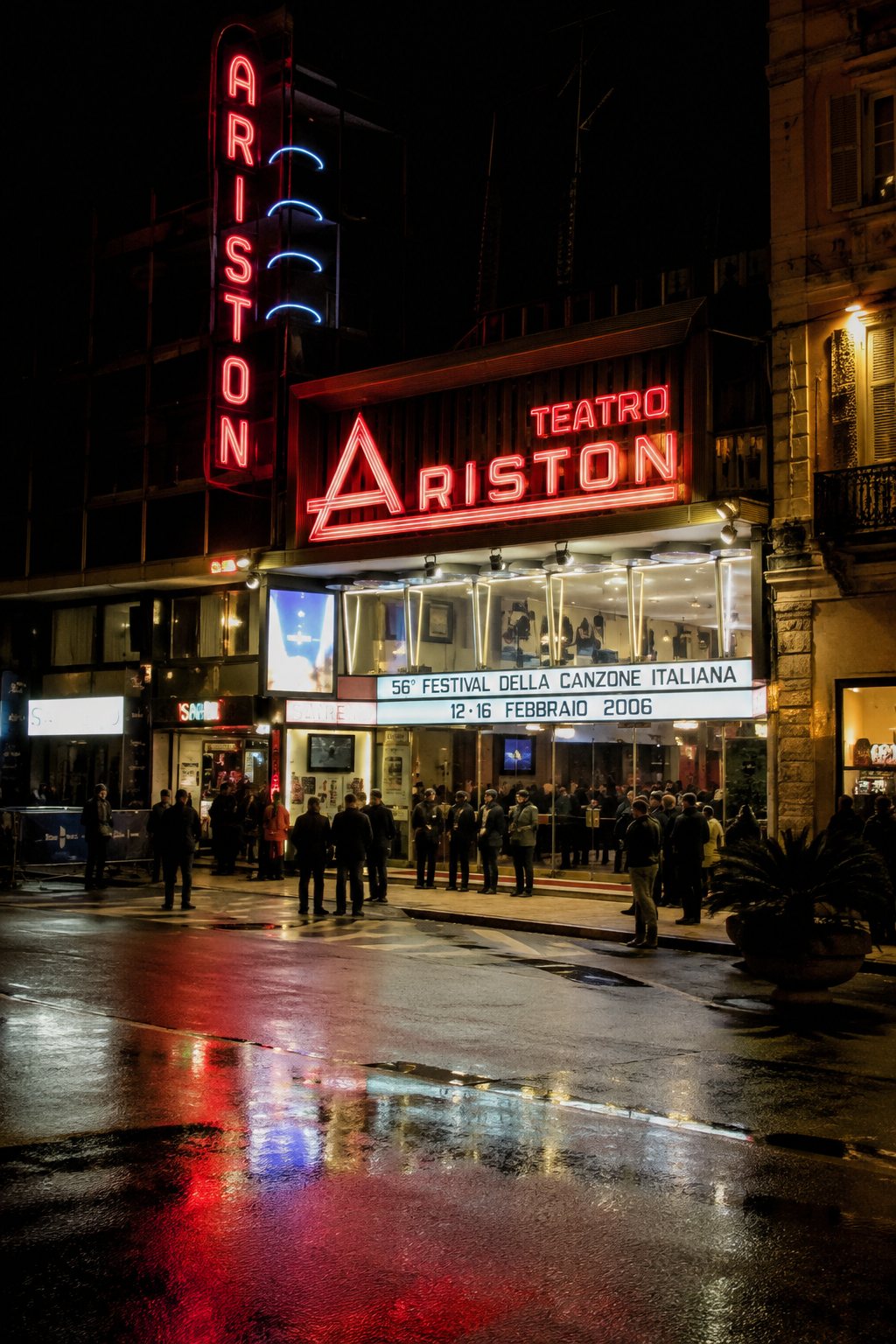
Sanremo Festival history is the story of how a song contest became a shared national ritual. There are television programs, there are music competitions, and then there is Sanremo. Trying to explain the Festival di Sanremo to someone who has never lived through an Italian February is a little like trying to explain why an entire country can argue about a song as though it were a constitutional amendment. For five nights the Teatro Ariston becomes a national parliament of melody, fashion, gossip, memory and nerves. Families who disagree about almost everything suddenly agree that the second song was too long. People who claim never to watch television know the running order. Young listeners who live on streaming platforms discover singers their grandparents adored. Grandparents learn the names of rappers they never expected to hear accompanied by a full orchestra. Newspapers, radio stations, social media, offices, bars and kitchens all begin discussing the same stage in the same Ligurian town. The extraordinary thing is not that Sanremo has survived. The extraordinary thing is that after more than seven decades it can still create a shared national conversation in a culture that has become fragmented in almost every other way.
Sanremo is not simply the story of who won. In fact, one of the festival’s most charming rules is that history often ignores the scoreboard. Some winning songs became permanent fixtures of Italian life; others faded quickly. Some songs that lost became classics. Artists who finished far from the podium went on to become giants, while supposedly safe favorites vanished with the speed of a bouquet being carried offstage. The festival is therefore best understood not as a court delivering final judgments, but as a giant spotlight. For a few minutes it shines on a song, a face, a voice, a suit, a hairstyle, a nervous hand gripping a microphone. What happens afterward belongs to the public. Domenico Modugno needed Sanremo, but Sanremo also needed Modugno. Laura Pausini arrived as a young newcomer and left with the beginning of an international career. Vasco Rossi did not need to win to become Vasco Rossi. Mia Martini proved that emotional truth can outlive any ranking. The Måneskin used the Ariston as the first launchpad of a global explosion. Sanremo chooses winners, but time chooses legends.
That is why the festival works as a strange, unofficial history of modern Italy. In the early 1950s it reflected a country still recovering from war and hungry for elegance, reassurance and shared rituals. In the boom years it absorbed the optimism of television, consumer culture and youth. In the 1960s it became a battlefield between the old melodic tradition and the new personalities who moved, shouted, wrote their own songs and looked as though they had stepped in from a different future. In the 1970s Sanremo seemed at times to be losing its grip on a more complicated society, only to discover that survival itself could become a form of reinvention. The 1980s gave it back scale and popular confidence. The 1990s turned it into a total media event. The internet age was supposed to make it irrelevant; instead, the festival learned how to become a meme factory without surrendering the orchestra. Every generation has announced that Sanremo is finished. Every generation, sooner or later, ends up discussing it.
For an international reader, the easiest mistake is to think of Sanremo as Italy’s Eurovision selection show. Historically the relationship is more complicated and much richer. Sanremo came first. Its formula helped inspire the birth of the Eurovision Song Contest, and for long periods the winner or a chosen Sanremo artist has represented Italy in Europe. Yet the Italian festival has its own independent life, traditions and emotional geography. The prize is not merely a ticket to another competition. The real prize is entry into the national memory. The theater, the flowers, the orchestra, the press room, the hosts, the long nights, the whispered backstage tensions and the final envelope are all part of an annual ritual that has become larger than any single song. To tell the story of Sanremo, then, is to tell the story of Italy discovering how to sing itself in public.
1951: a casino, an orchestra and a country ready to begin again
The first Festival della Canzone Italiana opened on 29 January 1951 at the Casino di Sanremo. The setting mattered. Postwar Italy was rebuilding not only roads and factories but also habits of leisure, confidence and public elegance. Sanremo, already known as a refined resort on the Riviera dei Fiori, offered the right mixture of glamour and intimacy. The first festival was not the colossal television event we know today. It was a radio occasion, hosted by Nunzio Filogamo, with only three singers performing twenty competing songs. The orchestra was led by Cinico Angelini. Dinner tables, evening clothes and the atmosphere of a respectable entertainment venue made the early festival feel more like a sophisticated national salon than a mass-media circus. And yet, hidden inside that modest format, almost every essential ingredient of the future was already present: competition, anticipation, a host addressing listeners across Italy, songs trying to become instantly memorable and a town transforming itself into the temporary capital of popular music.
Nilla Pizzi won that first edition with “Grazie dei fiori,” and the choice could hardly have been more symbolic. Her voice, diction and poised presence matched the Italy of the moment: sentimental without embarrassment, formal without being cold, melodic in a way that could travel from radio speakers into family life. She was not merely the first winner; she became Sanremo’s first queen. The following year she won again with “Vola colomba,” while “Papaveri e papere” became another enormous popular success. In those early editions the song itself was often treated as more important than the cult of a single performer. The same composition could be presented by different singers, a practice that feels almost impossible in today’s personality-driven music industry. But in the early 1950s the melody and the songwriter were central, and the singer was the interpreter entrusted with carrying the composition into the public imagination.
The festival grew astonishingly fast. By 1952 hundreds of songs were being submitted for selection. In 1953 Carla Boni and Flo Sandon’s won with “Viale d’autunno,” ending Nilla Pizzi’s initial reign. Giorgio Consolini and Gino Latilla followed in 1954 with “Tutte le mamme.” These songs belong to a world of orchestral arrangements, careful pronunciation and emotions stated with a clarity that later generations might call old-fashioned but that, in its own time, felt entirely natural. The important point is that Sanremo was creating a national songbook at precisely the moment Italy was becoming more connected through radio, records and eventually television. Before the country had motorways tying every region together, it already had melodies traveling across regional borders.
Nunzio Filogamo’s famous greeting to “friends near and far” captured the democratic promise of broadcasting. There were people physically present in Sanremo, and there were millions of others who might be listening from kitchens, cafés, barracks, country houses or city apartments. The festival’s true theater was already larger than the room in which it took place. That insight would become decisive once television arrived. Sanremo learned from the beginning that its audience was not simply watching an event; it was joining a temporary community. The ritual of listening together, judging together and remembering together became more important than any particular rule of the competition.
Television arrives, and Modugno opens the sky
Television changed Sanremo because television changed Italy. The festival began to be televised in 1955, when Claudio Villa and Tullio Pane won with “Buongiorno tristezza.” Early broadcasts were hardly the prime-time marathons of the modern era. They could begin very late, after other programming, and the technical grammar of live television was still developing. Yet the effect was revolutionary. Listeners were no longer imagining the singer; they could see the clothes, the posture, the gestures, the nervousness and the relationship between performer and orchestra. The festival became visual. From that moment, appearance and personality would increasingly matter alongside melody.
The mid-1950s winners—Franca Raimondi with “Aprite le finestre,” Claudio Villa and Nunzio Gallo with “Corde della mia chitarra”—still belonged to the classical melodic world. Then came 1958. Domenico Modugno, paired in the competition with Johnny Dorelli, performed “Nel blu dipinto di blu.” In the history of Italian popular culture, few moments have been repeated so often and with so much affection: Modugno opening his arms, the song lifting away from the polite conventions of the stage, the word “Volare” becoming bigger than the original title. It is easy, decades later, to hear the song as a permanent classic and miss how modern it felt. Modugno did not merely sing; he inhabited the song physically. He was expansive, theatrical, personal. He turned interpretation into personality.
“Nel blu dipinto di blu” won Sanremo, then traveled around the world and became one of the most internationally recognized Italian songs ever recorded. Modugno returned in 1959 with “Piove (Ciao ciao bambina)” and won again with Johnny Dorelli. Sanremo had discovered a new possibility: the festival could be deeply Italian and internationally legible at the same time. This mattered enormously for a country entering its economic boom and beginning to present itself abroad through design, cinema, fashion, manufacturing and popular culture. A song born in a Ligurian theater could become a global symbol of Italian exuberance.
The Modugno moment also changed the internal balance of the festival. Claudio Villa remained a colossus of the traditional school, and Sanremo would continue to respect grand melodic singing. But from then on the public expected more than a beautiful voice. It expected a presence. It expected a performer to bring something personal to the stage. That shift prepared the ground for the 1960s, when singers would increasingly arrive with distinctive images, attitudes and styles. Sanremo did not abandon tradition; instead, it became the arena where tradition and modernity were forced to look at each other under the same lights.
The 1960s: youth, television, rebellion and the tragedy of Luigi Tenco
The 1960s were Sanremo’s first great age of contradiction. Italy was enjoying the economic miracle, buying televisions, scooters, cars and household appliances, moving from countryside to cities and discovering a new youth culture. The festival had to accommodate a public that still loved Claudio Villa while becoming fascinated by figures who looked, moved and sounded very different. Adriano Celentano brought rock-and-roll body language and a refusal to behave like the old-style crooner. Mina transformed the idea of the Italian female singer through extraordinary vocal command and a modern, magnetic stage identity. Gino Paoli, Giorgio Gaber, Umberto Bindi and other singer-songwriters introduced the presence of authors who wanted the song to carry a more personal signature. Sanremo, sometimes unwillingly, became the place where these different Italys collided.
In 1960 Tony Dallara and Renato Rascel won with “Romantica.” Betty Curtis and Luciano Tajoli followed with “Al di là,” Domenico Modugno and Claudio Villa with “Addio… addio,” and Tony Renis with Emilio Pericoli with “Uno per tutte.” Then in 1964 a sixteen-year-old Gigliola Cinquetti won with “Non ho l’età (per amarti),” performed in the double-version system with Patricia Carli. Cinquetti’s image of youthful modesty captured a very specific Italian moment: young people were becoming culturally central, but public ideas about romance and femininity were still guarded by older codes. The song’s subsequent Eurovision victory made her an international figure and strengthened the link between Sanremo and the emerging European television culture.
The middle of the decade produced Bobby Solo’s “Se piangi, se ridi,” Modugno and Cinquetti’s “Dio, come ti amo,” and a constant tension between melodic conservatism and new sounds. The festival could seem old and new in the same evening. That was not a weakness; it became part of its identity. Italy itself was experiencing rapid social change, and Sanremo’s stage could not possibly present a single coherent answer. It offered instead a procession of competing ideas about what an Italian song should sound like, who should sing it and how much personality the performer was allowed to display.
Then came 1967 and Luigi Tenco. He entered with “Ciao amore ciao,” performed in the system that paired songs with different interpreters. After the song failed to advance, Tenco died during the festival. His death became one of the darkest and most painful moments in Italian entertainment history. It would be irresponsible to reduce such a tragedy to a neat symbolic lesson, yet there is no question that the event permanently changed the emotional meaning of Sanremo. The festival could no longer be imagined only as flowers, evening clothes and harmless competition. It was also a place where artistic ambition, commercial expectation, public judgment and individual vulnerability could meet under enormous pressure.
The decade closed with songs that showed how broad Sanremo had become: Claudio Villa and Iva Zanicchi won in 1967 with “Non pensare a me,” Sergio Endrigo and Roberto Carlos with “Canzone per te” in 1968, and Bobby Solo with Iva Zanicchi with “Zingara” in 1969. Endrigo’s victory was especially meaningful because it proved that sophisticated songwriting and mainstream festival success were not incompatible. By the end of the 1960s, Sanremo had become not only a competition but a symbolic battleground over the identity of Italian popular music. That battle would become even more difficult in the 1970s.
The difficult 1970s and the move to the Ariston
The 1970s are often described as a period when Sanremo lost some of its centrality, and there is truth in that. Italian music had become more fragmented. Singer-songwriters were gaining cultural authority, progressive rock had its own audience, political songwriting mattered, international influences were everywhere, and younger listeners no longer accepted that a single television festival could define the nation’s musical taste. Sanremo seemed, at times, to belong to an older system. Yet its apparent weakness during this decade taught it one of the skills that would save it repeatedly: how to survive while being declared out of date.
The decade began strongly with Adriano Celentano and Claudia Mori winning in 1970 with “Chi non lavora non fa l’amore,” a title that sounded almost like a social slogan disguised as a catchy popular song. Nada and Nicola Di Bari won in 1971 with “Il cuore è uno zingaro,” Nicola Di Bari again in 1972 with “I giorni dell’arcobaleno,” Peppino Di Capri in 1973 with “Un grande amore e niente più,” and Iva Zanicchi in 1974 with “Ciao cara, come stai?” In 1975 Gilda won with “Ragazza del Sud,” followed by another victory for Peppino Di Capri in 1976 with “Non lo faccio più.” Homo Sapiens took 1977 with “Bella da morire,” Matia Bazar won in 1978 with “…e dirsi ciao!” and Mino Vergnaghi in 1979 with “Amare.” The list is eclectic, which is precisely the point: Sanremo was no longer dictating a single national style. It was trying to hold together a musical country that had become far more complicated.
The most important structural change came in 1977, when the festival moved from the Casino to the Teatro Ariston. This was not merely a practical relocation. It changed the visual mythology of Sanremo. The Casino belonged to the festival’s elegant, more intimate origins. The Ariston belonged to the age of television. Its façade, neon sign, entrance, foyer, orchestra pit and tightly framed stage became part of the national imagination. Over time, the Ariston would become almost a character in the story, a building known to millions of people who had never set foot in Sanremo. Say “the Ariston” in Italy and almost nobody asks what city you mean.
The 1970s also forced the festival to confront a broader cultural problem: many of the most influential Italian artists did not necessarily need Sanremo, and some treated it with skepticism. This could have been fatal. Instead, the festival slowly redefined its mission. It would no longer pretend to be the only place where Italian music mattered. It would become the biggest place where different generations, genres and levels of popularity could collide. That shift was not completed immediately, but it laid the groundwork for the 1980s revival.
Seen from today, the supposedly weak 1970s were therefore an essential apprenticeship. Sanremo learned that it could lose cultural monopoly without losing symbolic power. It could be criticized, mocked, abandoned by certain artists and still remain part of the national calendar. In a strange way, its resilience became more important than its prestige. The festival did not have to win every argument about modernity. It only had to remain standing long enough to reinvent itself. In the 1980s, with the help of television professionals who understood spectacle, it would do exactly that.
The 1980s: Pippo Baudo, new stars and the return of the national event
If the 1970s taught Sanremo to survive, the 1980s taught it how to become enormous again. Italian television itself was changing: commercial networks were growing, the language of entertainment was becoming faster and more competitive, and the old solemnity of state broadcasting was giving way to a more energetic popular style. Sanremo responded by becoming a total television event. No figure was more important to that transformation than Pippo Baudo. Calling Baudo a presenter is accurate in the same way that calling a conductor a person who waves a stick is accurate. He understood the architecture of an evening, the emotional rhythm of a live broadcast, the value of a new face, the usefulness of a pause and the importance of making the audience feel that something decisive might happen at any moment.
The decade began with Toto Cutugno winning in 1980 with “Solo noi.” Alice won in 1981 with “Per Elisa,” written with Franco Battiato, a victory that proved sophisticated pop could succeed within the festival machine. Riccardo Fogli followed with “Storie di tutti i giorni,” and Tiziana Rivale won in 1983 with “Sarà quel che sarà.” Yet 1983 is remembered just as powerfully for songs that did not win, including Toto Cutugno’s “L’italiano,” Matia Bazar’s “Vacanze romane” and Vasco Rossi’s “Vita spericolata.” This is Sanremo’s recurring joke on its own ranking system: the public memory has never agreed to obey the final scoreboard.
Al Bano and Romina Power won in 1984 with “Ci sarà,” turning their already enormous popularity into one of the decade’s emblematic Sanremo moments. That same year a young Eros Ramazzotti won the newcomers’ section with “Terra promessa.” Two years later he returned among the major artists and won with “Adesso tu,” a perfect demonstration of what the festival could do when its talent-discovery mechanism worked at full strength. Ricchi e Poveri won in 1985 with “Se m’innamoro.” In 1987 Gianni Morandi, Enrico Ruggeri and Umberto Tozzi won together with “Si può dare di più.” In 1988 Massimo Ranieri returned triumphantly with “Perdere l’amore,” one of those rare festival victories in which the winning song and long-term public memory agree completely. Anna Oxa and Fausto Leali closed the decade in 1989 with “Ti lascerò.”
The 1980s also saw the festival refine the category for new artists, creating a clear pathway through which young performers could become national names. Sanremo was once again useful to the record industry, but it was also useful to viewers, who loved the drama of discovering someone before everyone else did. The festival became a giant annual casting of Italian pop culture. This was not always elegant, and the decade’s taste for television spectacle sometimes produced excess. Yet excess was part of the pleasure. The event looked important because it behaved as though it were important.
Other presenters contributed different flavors. Raffaella Carrà brought unstoppable television instinct, Loretta Goggi combined professional command with warmth, Claudio Cecchetto represented a more youth-oriented media sensibility, and Raimondo Vianello added the dry elegance of a master who could puncture pomposity with a single line. But Baudo remained the dominant symbolic figure because he understood that Sanremo required not just announcing songs but shaping a national story around them. Under his influence the presenter became a kind of temporary mayor of Italian entertainment.
The decade also normalized the idea that losing at Sanremo could be perfectly compatible with becoming a legend. Vasco Rossi, Zucchero, Mango, Mia Martini and others demonstrated that the festival could introduce, confirm or reframe an artist without needing to hand them the trophy. This loosened the relationship between artistic value and competition result. Sanremo became less like a final judgment and more like an unavoidable stage in a career. By the end of the 1980s, the festival had regained the one thing it had risked losing: urgency. People once again felt that missing Sanremo meant missing a piece of the national conversation.
The 1990s: big television, emotional voices and the stars Sanremo sent into the world
The 1990s were the age of the gigantic television Sanremo. The festival expanded beyond the hours of the broadcast into press conferences, newspaper columns, radio commentary, hotel gossip, backstage rumors and endless analysis. The competition became an ecosystem. A singer could arrive in Sanremo relatively unknown and, within forty-eight hours, have a face recognized across the country. This was the decade in which that power produced several of the most important careers in modern Italian music.
Laura Pausini is the obvious example. In 1993 she entered the newcomers’ section with “La solitudine” and won. The song was direct, youthful and emotionally transparent, and her voice carried it with a natural strength that viewers recognized immediately. Sanremo did not create her talent, but it gave that talent the largest possible national window. From there came an international career extraordinary for an Italian pop singer, particularly in Spanish-speaking markets. Giorgia followed a similarly dramatic trajectory. She won among the newcomers in 1994 with “E poi,” then returned in 1995 and won the main competition with “Come saprei.” Her vocal ability was impossible to treat as mere television packaging; the festival had become the place where a major singer could be publicly certified in real time.
Andrea Bocelli also emerged through Sanremo’s young section, winning in 1994 with “Il mare calmo della sera.” His subsequent global career in classical crossover music would make him one of Italy’s most internationally recognizable voices. The sequence is remarkable: within a small number of editions, Sanremo introduced or elevated Pausini, Giorgia and Bocelli. Few entertainment formats anywhere in Europe can claim such a concentrated record of launching artists who would still matter decades later.
The decade was equally important for established artists. Mia Martini returned to Sanremo with performances whose emotional force often outweighed the official results. Her presence became part of the festival’s moral memory, a reminder that public acclaim can be cruelly late and that an artist’s relationship with Sanremo can contain redemption as well as competition. Anna Oxa continued to reinvent herself, moving through different images and styles with rare confidence. Riccardo Cocciante won in 1991 with “Se stiamo insieme,” Luca Barbarossa in 1992 with “Portami a ballare,” Enrico Ruggeri in 1993 with “Mistero,” Aleandro Baldi in 1994 with “Passerà,” Ron and Tosca in 1996 with “Vorrei incontrarti fra cent’anni,” Jalisse in 1997 with “Fiumi di parole,” Annalisa Minetti in 1998 with “Senza te o con te,” and Anna Oxa in 1999 with “Senza pietà.”
The 1990s also perfected the Sanremo paradox: huge television could coexist with intense musical moments. The staging became more sophisticated, guest stars more international and media attention more relentless, yet a singer could still stand almost still at a microphone and silence the theater. This tension between spectacle and intimacy is one of the festival’s secret strengths. Sanremo can be absurdly large, but the decisive moment remains three or four minutes in which a voice either reaches the audience or does not.
Pippo Baudo remained a central figure, but Fabio Fazio offered a different hosting language, more conversational and ironic, less ceremonial. Raimondo Vianello’s presence brought another kind of sophistication. The fact that Sanremo could absorb these different personalities without losing its identity proved how strong the format had become. By the end of the decade, the festival was no longer merely surviving. It had become an institution confident enough to change tone from year to year while keeping the same ritual core.
The 2000s: the internet arrives, television changes, Sanremo refuses to disappear
The new millennium was supposed to make a festival born in 1951 look ancient. Music consumption was changing, private television had long since broken the monopoly of the old national schedule, and the internet was beginning to dismantle the idea that millions of people would all listen to the same thing at the same time. Record sales would soon be transformed by digital distribution, then streaming. In theory, Sanremo should have become smaller. Instead, it became more self-conscious, more experimental and, after some uneven years, unexpectedly resilient.
The winners of the decade reveal the variety of its musical identity. Avion Travel won in 2000 with “Sentimento,” a sophisticated and elegant victory. Elisa followed in 2001 with “Luce (Tramonti a nord est),” one of the strongest artistic triumphs of modern Sanremo. Matia Bazar returned to win in 2002 with “Messaggio d’amore,” Alexia won in 2003, Marco Masini in 2004, Francesco Renga in 2005, Povia in 2006, Simone Cristicchi in 2007 with “Ti regalerò una rosa,” Giò Di Tonno and Lola Ponce in 2008, and Marco Carta in 2009. The list moves from sophisticated pop to theatrical ballad, singer-songwriter material and the growing influence of television talent culture. Sanremo was no longer defining one mainstream; it was negotiating among several.
The presenters became experiments in tone. Fabio Fazio brought intelligence, understatement and a desire to treat the festival with respect without drowning it in solemnity. Paolo Bonolis did almost the opposite: speed, verbal energy, big-show confidence and a sense that television should never become static. Antonella Clerici offered warmth and familiarity. Simona Ventura represented the era of celebrity television and a more aggressive media tempo. The festival sometimes looked uncertain because the television world around it was uncertain. Yet every attempt, even the less successful ones, contributed to the long process of figuring out what Sanremo could be in the digital age.
A crucial development was the growth of the conversation outside the broadcast. Websites, online forums and then social networks transformed the audience from spectators into instant commentators. For Sanremo this proved to be an advantage, because the festival had always depended on public argument. Social media did not invent the Italian habit of judging the songs, the clothes, the hosts and the voting. It simply made the bar conversation visible in real time. The festival discovered that its old structure—competition, surprise, fashion, scandal, ranking—was almost perfectly designed for the internet.
The 2000s therefore became less a period of decline than a laboratory. Sanremo had to learn that it could no longer command the music market simply by existing. It had to earn attention. It had to bring in artists who mattered, produce television moments that traveled beyond the broadcast and rediscover the value of the live orchestra and the unique pressure of the Ariston stage. Those lessons would become vital in the following decade, when a new generation of artistic directors and hosts rebuilt the festival’s authority.
2010–2019: from Morandi and Fazio to Conti, Baglioni and the streaming generation
The 2010s began with the festival still searching for the ideal balance between heritage and contemporary relevance. Valerio Scanu won in 2010, Roberto Vecchioni in 2011 with “Chiamami ancora amore,” Emma in 2012, Marco Mengoni in 2013 with “L’essenziale,” and Arisa in 2014 with “Controvento.” The winners themselves showed how wide the spectrum had become: television talent alumni, veteran singer-songwriters, major new pop voices. Sanremo was no longer embarrassed by its contradictions. It was beginning to understand that the contradictions were the format.
Gianni Morandi’s editions had particular symbolic weight because he was not simply a host but a living piece of Italian music history. He brought a friendly authority, the ease of someone who knew the festival from the singer’s side of the microphone. Fabio Fazio returned with a more culturally reflective approach. Then Carlo Conti took over in 2015 and achieved something deceptively difficult: he made Sanremo feel simple again. His style was disciplined, fast, warm and unshowy. He did not try to prove that he was bigger than the event. He allowed the event to be big around him.
The results were strong. Il Volo won in 2015 with “Grande amore,” giving the festival a proudly melodic victory with international ambition. Stadio won in 2016 with “Un giorno mi dirai,” a triumph for a veteran group. Francesco Gabbani won in 2017 with “Occidentali’s Karma,” a witty, contemporary song that became an immediate cultural phenomenon. Fiorella Mannoia, Noemi, Annalisa, Arisa, Malika Ayane, Patty Pravo, Elio e le Storie Tese, Ermal Meta, Fabrizio Moro and many others contributed to casts that felt broad without appearing random. Conti’s great achievement was organizational: the festival regained credibility because it looked as if someone was firmly but quietly steering the ship.
Maria De Filippi’s participation as a co-host in 2017 was also culturally significant. It joined two of the strongest traditions of Italian popular television: Rai’s Sanremo ritual and the talent-show, emotional-storytelling language associated with De Filippi. Rather than making the festival less authentic, the combination showed how Sanremo could absorb the television ecosystem around it while remaining recognizable.
Claudio Baglioni then led the 2018 and 2019 editions as artistic director and host, bringing a musician’s perspective to the job. The 2018 edition, with Michelle Hunziker and Pierfrancesco Favino, emphasized musical performance and theatricality. Ermal Meta and Fabrizio Moro won with “Non mi avete fatto niente.” In 2019 Mahmood won with “Soldi,” a decisive moment. The song sounded unmistakably contemporary, personal and urban. Its victory signaled that Sanremo was no longer merely tolerating the new language of Italian pop; it was capable of recognizing it as the center of the conversation.
By the end of the decade, streaming and social media had become fundamental to the festival’s afterlife. Songs could be measured immediately by digital consumption, and the old complaint that Sanremo existed in a world separate from “real” contemporary listening became harder to sustain. The festival was again producing hits that dominated charts and online culture. It had survived the transition from radio to television, from black and white to color, from vinyl to CD and from CD to streaming. The next challenge would be even stranger: running Sanremo through a global pandemic.
2020–2024: Amadeus, Fiorello, an empty Ariston and a global rock band
Amadeus arrived as artistic director and host in 2020 and quickly became the central figure of Sanremo’s most dramatic recent revival. His insight was not mysterious. He treated the contemporary Italian music scene as something worthy of the main stage rather than as a youth annex. He built lineups that mixed veterans, singer-songwriters, rappers, bands, radio pop and emerging names. He kept the traditional orchestra and ritual but allowed the cast to sound like the present. The effect was transformative: younger audiences did not feel they were being invited into their grandparents’ festival; they felt Sanremo had finally come to meet them.
Diodato won in 2020 with “Fai rumore,” a deeply emotional song that would soon acquire an almost uncanny resonance. Weeks later Italy entered the traumatic first phase of the Covid-19 pandemic. Images of empty streets and isolated people changed the meaning of a song whose title asked for noise, presence and contact. Sanremo could not have known what was coming, but the way the song lived afterward demonstrated the festival’s peculiar ability to attach itself to national memory.
The 2021 festival took place under extraordinary conditions, with the Ariston without its normal public. Sanremo without an audience seemed almost impossible: applause, tension and shared reaction are part of the theater’s physical rhythm. Yet the event went ahead. Amadeus and Fiorello carried an edition that often felt surreal, and precisely because it was so strange, it proved how deeply the festival had become a ritual. Italy did not need Sanremo because everything was normal; it needed Sanremo because almost nothing was normal. The festival became a sign that some cultural continuity could survive even in an emergency.
Then Måneskin won with “Zitti e buoni.” Their victory would become one of the great modern Sanremo launch stories. The band went on to win Eurovision and then built an international career that took Italian rock to audiences far beyond the traditional sphere of Italian music. Once again, Sanremo proved that it could be both an ancient institution and the starting point of something extremely current. In 2022 Mahmood returned and won with Blanco with “Brividi,” another song perfectly aligned with contemporary pop listening. Marco Mengoni won in 2023 with “Due vite,” completing a journey from his earlier 2013 victory to the status of a mature national star. Angelina Mango won in 2024 with “La noia,” bringing a fresh, rhythmic and highly individual performance to the top of the ranking.
Fiorello’s role throughout the Amadeus era deserves special attention. He was not simply another co-host. He functioned as the festival’s pressure valve: unpredictable, comic, musical, capable of breaking the stiffness that can descend on a five-night live event. His chemistry with Amadeus helped create the feeling that Sanremo was both extremely important and not too important to laugh at. That balance is one of the secrets of successful Italian television.
By 2024, Sanremo had accomplished something that would have seemed unlikely a decade earlier: it was again central to the real music market, to youth conversation and to mainstream television at the same time. The songs streamed, the artists trended, the memes traveled, the traditional audience remained, and the Ariston had once again become the place where the Italian music year truly began.
2025 and 2026: Carlo Conti returns, Olly wins, then Sal Da Vinci closes the latest chapter
After the Amadeus cycle, Carlo Conti returned to lead Sanremo in 2025. The change of style was immediately visible. Conti is less interested in making the presenter the emotional center of the evening; he prefers tempo, organization and a clean television machine. The 75th edition ended with Olly winning “Balorda nostalgia.” Lucio Corsi finished second and Brunori Sas third, creating an unusually songwriter-heavy podium. Olly’s victory also became part of a wider story when he chose not to represent Italy at Eurovision, allowing Lucio Corsi to take the opportunity. The episode showed how Sanremo’s relationship with Eurovision, while important, remains secondary to the festival’s own identity. Winning Sanremo is not merely a qualifying step; it is an event with its own weight.
Conti remained in charge for 2026, the 76th Festival della Canzone Italiana. The cast mixed established artists and younger names, with the kind of broad generational spread that has become essential to the modern festival. Sal Da Vinci won with “Per sempre sì,” followed by Sayf with “Tu mi piaci tanto” and Ditonellapiaga with “Che fastidio!” Fulminacci received the critics’ prize for “Stupida sfortuna,” while the festival once again demonstrated that the official podium is only one layer of the annual conversation. Songs, performances and personalities continue to build their own lives after the final ranking.
The 2026 edition also carried a symbolic sense of transition. Carlo Conti’s latest cycle confirmed that Sanremo could remain strong after the enormous Amadeus era without simply copying it. This is one of the festival’s recurring strengths: successful formulas are not reproduced forever. A new host changes the rhythm, a new artistic director changes the cast, a new generation changes the sound. The continuity lies in the ritual, not in one permanent style.
Looking back from 2026, the span from Nilla Pizzi to Sal Da Vinci is almost absurdly wide. It includes the arrival of television, the invention of youth culture, the golden age of variety, political turmoil, commercial television, compact discs, talent shows, social networks, streaming, a pandemic and the return of mass live-event culture. Sanremo has outlived technologies that once seemed more modern than the festival itself. That longevity is not a miracle of nostalgia. It is a consequence of adaptation. Sanremo survives because it changes just enough to remain familiar and remains familiar enough to make change visible.
The machinery behind the flowers: orchestra, press room, voting and the strange science of a Sanremo song
The public sees the singer walk onstage, hears the orchestra strike the first chord and waits three minutes for a verdict of the heart. Behind that simplicity lies an enormous production machine. Sanremo depends on musicians, conductors, arrangers, sound engineers, lighting teams, camera operators, stage managers, costume departments, writers, editors, press officers, runners, makeup artists, hairdressers, security staff and an army of technicians who make a live show look as if it simply happens. The orchestra is especially important. In an era dominated by digital production, hearing contemporary songs rearranged for live orchestral forces remains one of the festival’s distinctive pleasures. A rap-influenced track, a rock song and a traditional ballad may follow one another, all passing through the same physical room and the same live instrumental tradition.
The press rooms are another invisible theater. For decades, journalists have not merely reported Sanremo; they have participated in its atmosphere. Critics can build momentum for a song, challenge the official narrative, award separate prizes and turn a performance into a national discussion before the singer has even returned to the hotel. The Premio della Critica “Mia Martini” and the Sala Stampa “Lucio Dalla” prize acknowledge that Sanremo has multiple constituencies. The public may love one song, the press another, the radio jury another. This plurality is often criticized as confusing, but it actually fits the festival’s role. Sanremo is not trying to measure one objective truth. It is staging a negotiation among different kinds of taste.
Voting systems have changed repeatedly, and every change has produced accusations of injustice. Juries, televoting, press voting and weighted combinations have all been treated as either the salvation or destruction of the festival depending on who wins. Yet the instability of the rules has one positive effect: it prevents Sanremo from becoming a purely mathematical machine. The final result always contains an element of tension between expert judgment, public enthusiasm and media momentum. That tension generates conversation, which is the festival’s true renewable resource.
Then there is the question of what makes a “Sanremo song.” The phrase used to imply a certain melodic architecture: a strong refrain, an emotional lyric, a vocal climax and an arrangement built to fill a theater. That model never disappeared, but it has expanded. Today a Sanremo song can be intimate, urban, electronic, rock-based, theatrical, conversational or deliberately anti-melodic. What still matters is that it survive the peculiar conditions of the Ariston: one performance, enormous scrutiny, immediate comparison with dozens of other songs and a public ready to decide after a single listen. Writing for Sanremo is therefore a specific craft. The song has to reveal enough on first contact to be remembered, but enough depth to survive the repetitions that follow.
Fashion is part of the same machinery. Sanremo has always been a visual archive of Italian taste, from the formal elegance of the early years to the exuberance of the 1980s, the glossy television style of the 1990s and the more fluid, experimental identity politics of recent editions. A dress, a suit, a hairstyle or a staging choice can become as discussed as a chorus. Purists may complain that this distracts from the music, but Sanremo has never been only music. It is popular culture in its broadest sense, and popular culture arrives dressed.
Twenty faces of Sanremo television
The festival has always needed singers, but it has also needed people capable of holding the national conversation together between songs. Some were official hosts, some co-hosts, some artistic directors who also presented, and some recurring partners whose presence became inseparable from a particular era. Together they form a parallel history of Italian television.
Nunzio Filogamo
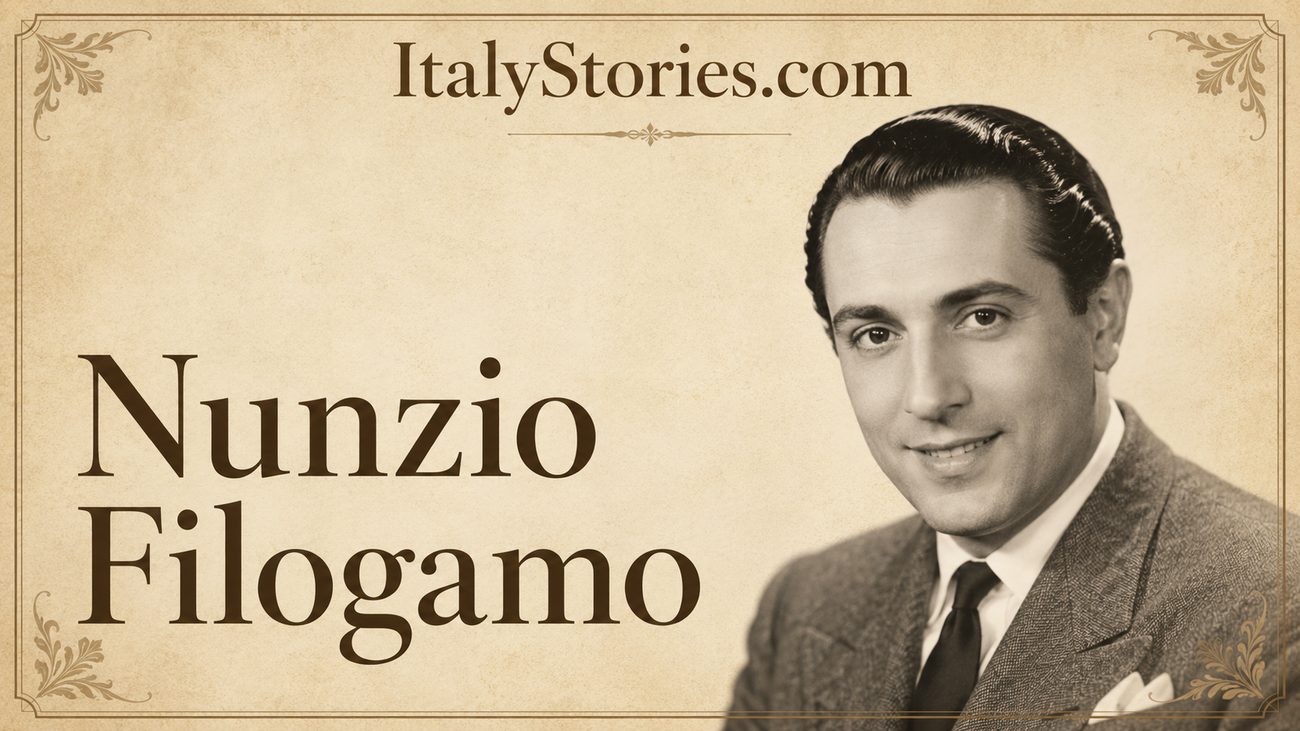
Nunzio Filogamo belongs to the founding mythology of Sanremo. He hosted the first edition in 1951 and gave the festival one of the most famous greetings in Italian broadcasting, addressing “friends near and far.” His style reflected the radio age: precise diction, formal courtesy, a sense of ceremony and the ability to make distant listeners feel included. Modern hosts work with giant LED walls, social media and instant reaction; Filogamo had voice, timing and imagination. He established the host as the bridge between the room in Sanremo and the country beyond it.
Mike Bongiorno
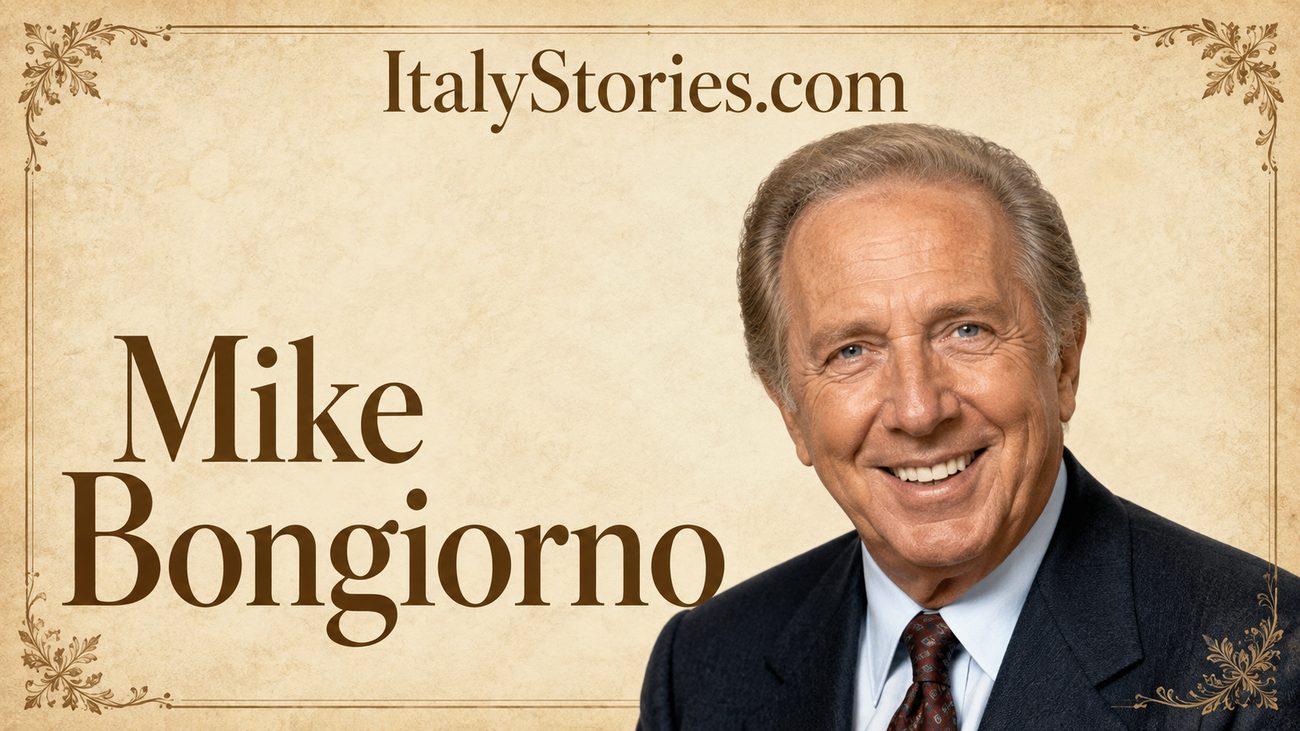
Mike Bongiorno brought Sanremo the reassuring authority of Italy’s great popular television era. His genius was accessibility. He could make an event feel important without making viewers feel excluded by its importance. At Sanremo, as in his quiz shows, he spoke to the public as if television were a shared domestic space. That ability helped transform the festival from an elegant entertainment into a family ritual. Bongiorno’s presence is inseparable from the period in which Italian television learned how to speak to an entire country at once.
Corrado
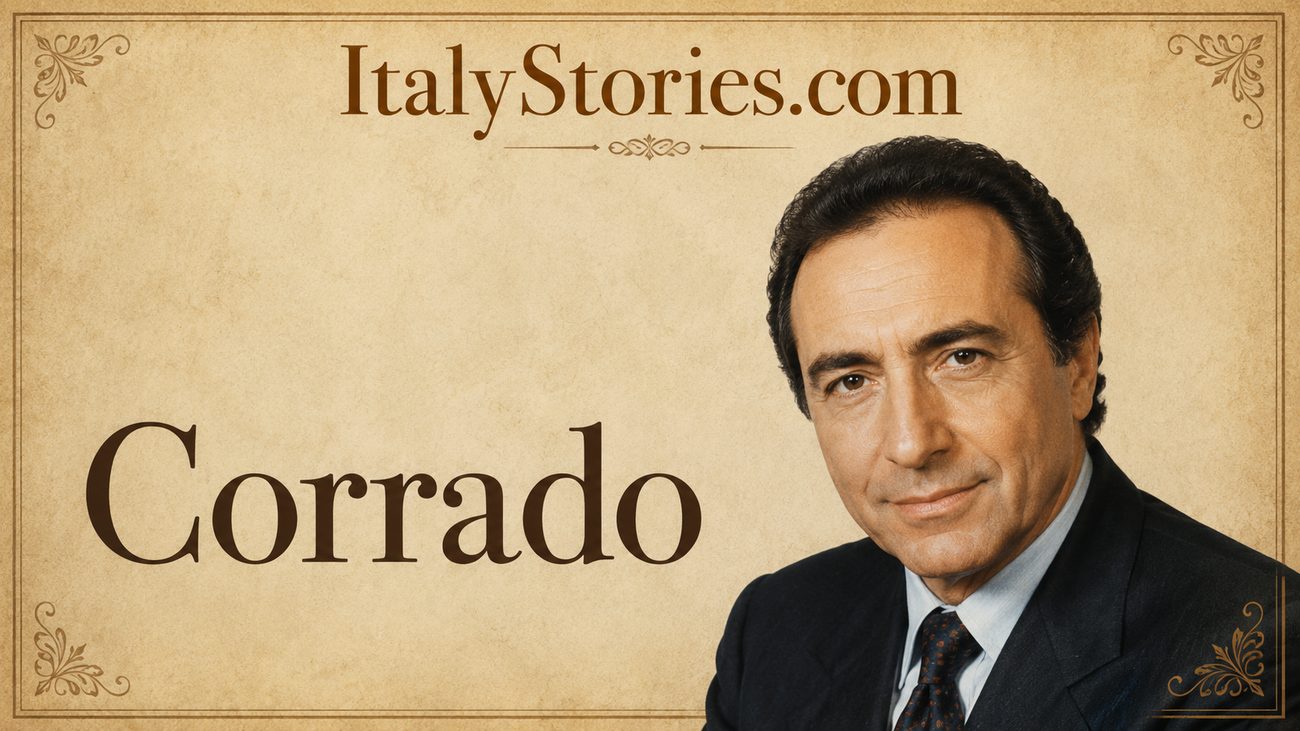
Corrado represented a different kind of mastery: calm, dry, impeccably controlled. He rarely needed theatrical gestures because his authority came from rhythm and intelligence. In the history of Sanremo presenting, he stands for the professional who understood that the host’s job was not to compete with the singers but to keep the evening moving with confidence. His understated irony also suited a festival that could easily become too solemn about itself. Corrado knew how to give importance to the event while quietly reminding the audience that it was still entertainment.
Pippo Baudo
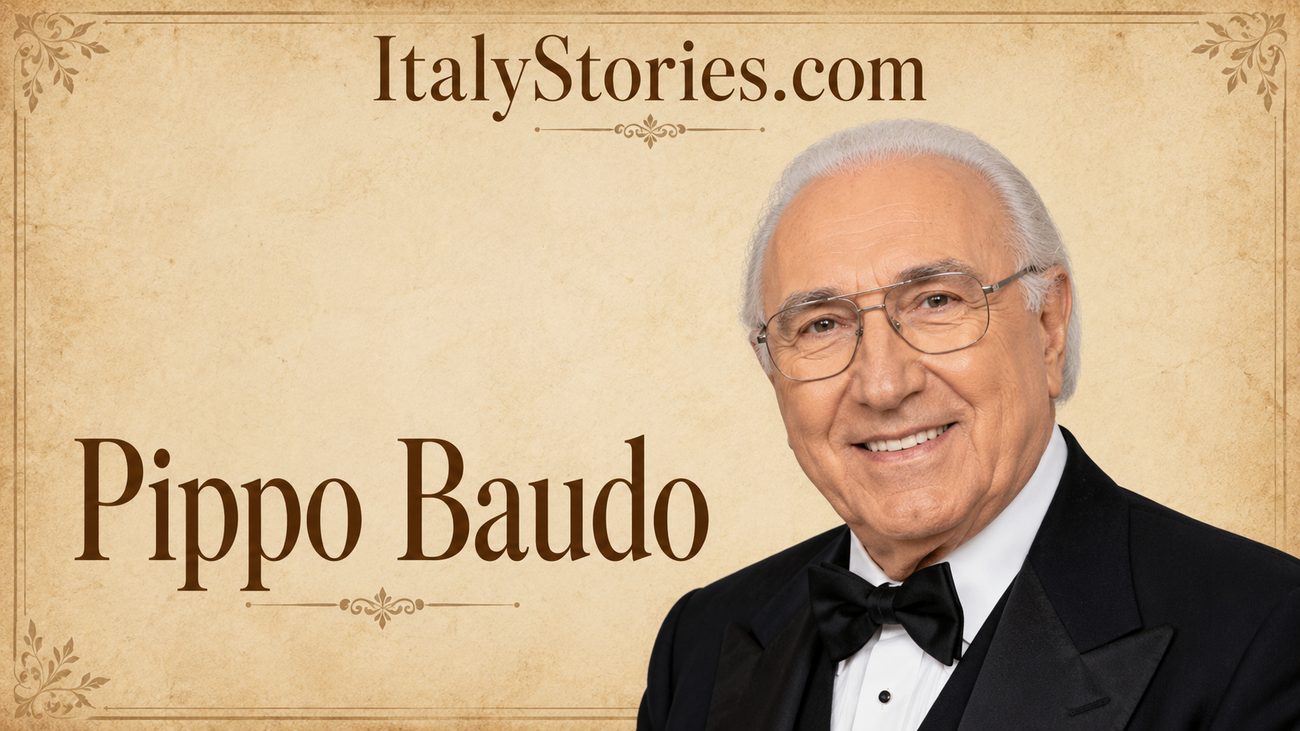
Pippo Baudo is the presenter most closely associated with the modern mythology of Sanremo. He was not simply a host but a talent scout, editor, showman and architect of television rhythm. His editions often felt as though the entire Italian entertainment industry had been organized around his timetable. Baudo had an instinct for discovering new artists and for making a debut feel like a national event. He could be formal, warm, authoritarian, humorous and sentimental within the same evening. For generations of viewers, “Sanremo” and “Baudo” became almost interchangeable words.
Raffaella Carrà
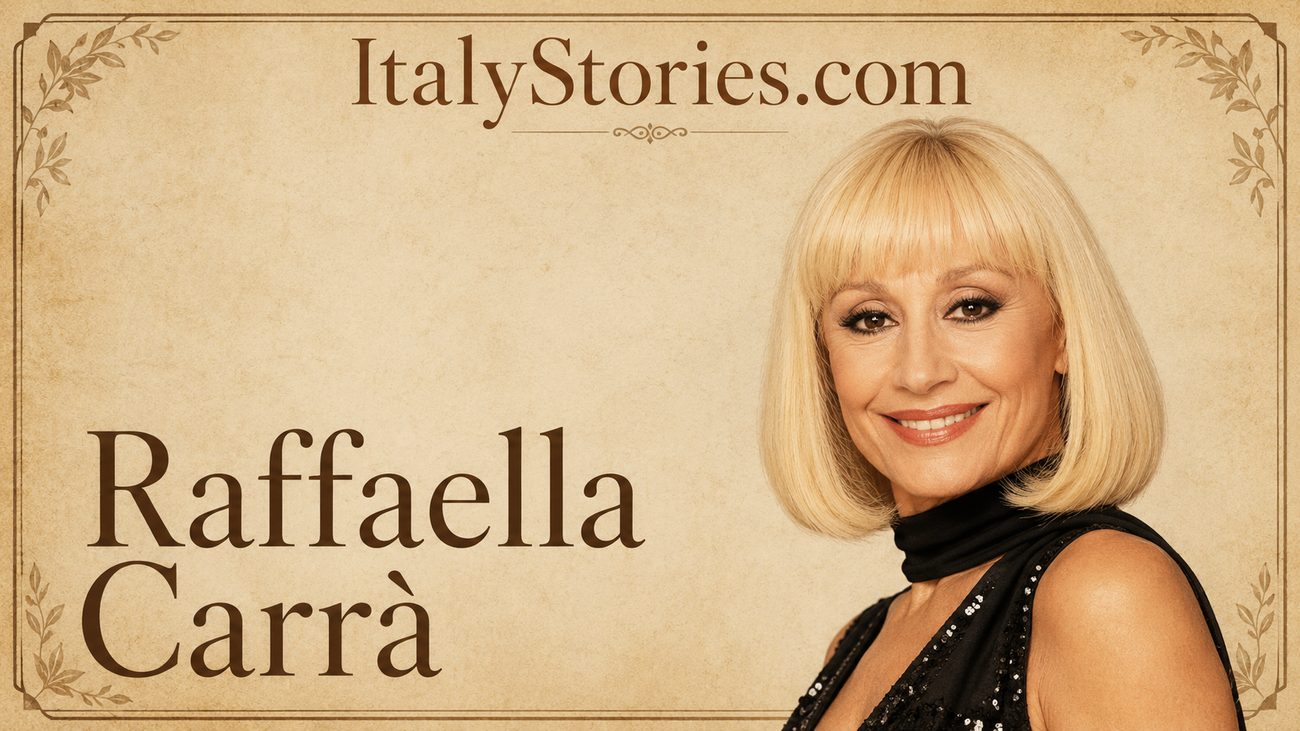
Raffaella Carrà brought to Sanremo the effortless command of a performer who understood television from every angle: music, dance, comedy, glamour and direct connection with the camera. Her energy made formality feel lighter. She represented the international, modern side of Italian variety entertainment without ever losing the warmth that made her beloved at home. In the festival’s host gallery, Carrà matters because she demonstrated that professionalism could look joyful, and that a presenter could control a complex live show while giving the impression of simply enjoying the party.
Raimondo Vianello
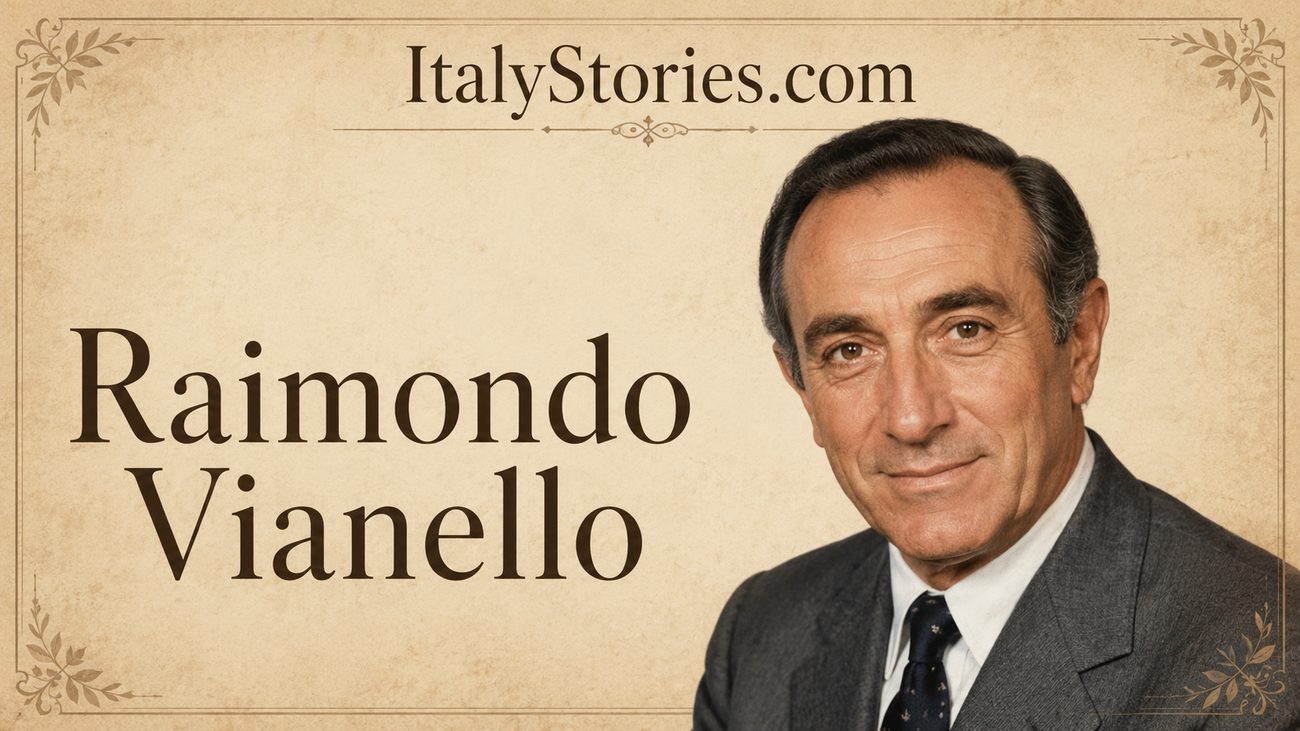
Raimondo Vianello’s contribution to Sanremo belongs to the tradition of elegant irony. He had the rare ability to puncture pomposity without humiliating anyone. That was useful at a festival where emotional intensity, formal clothes and national expectations can quickly become excessive. Vianello’s dry delivery created distance at exactly the right moments. He represented an older school of television in which wit was economical and timing mattered more than volume. His presence remains one of the clearest examples of how a strong personality can host Sanremo without turning it into a personal showcase.
Fabio Fazio
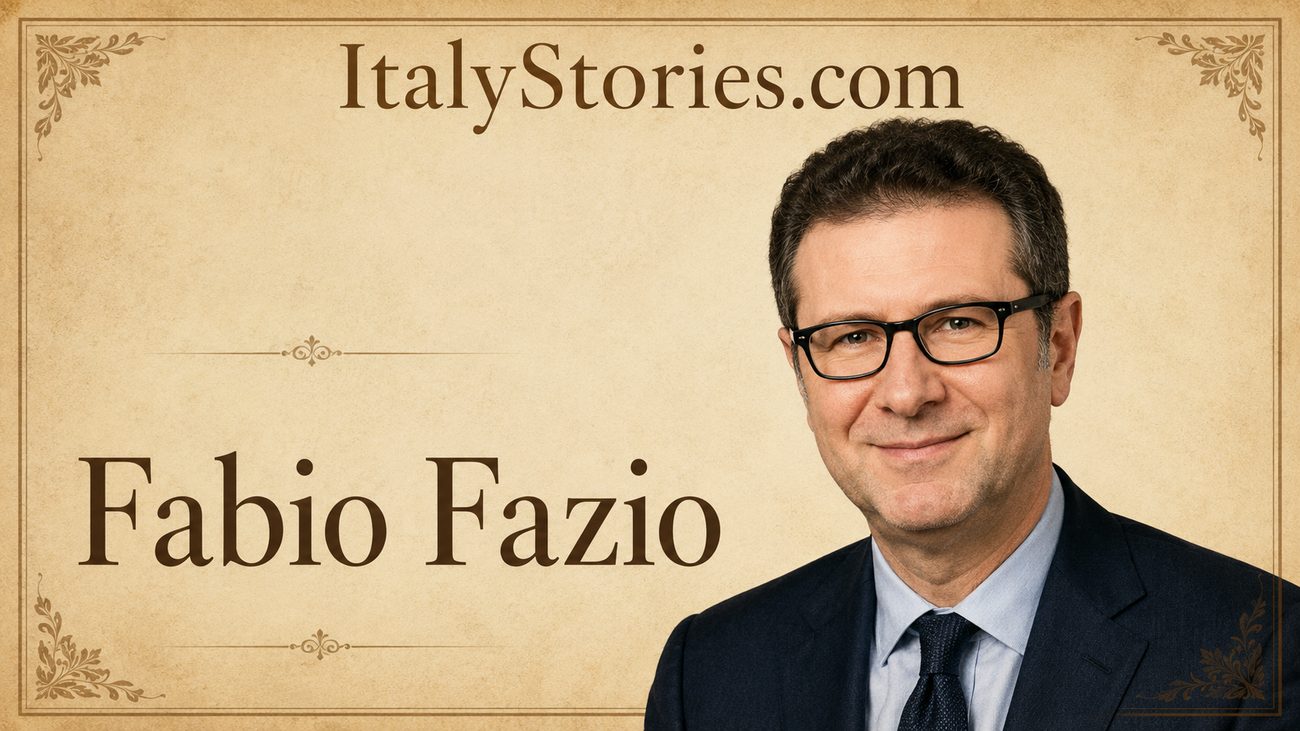
Fabio Fazio brought Sanremo a conversational intelligence that contrasted with the grand-master-of-ceremonies tradition. His editions often aimed to reduce unnecessary noise and give space to music, guests and ideas. Fazio’s style is built on listening, irony and careful understatement. At Sanremo this could feel almost radical, because the festival naturally encourages excess. He showed that the event could be important without constantly announcing its importance. His approach also helped connect Sanremo with a more contemporary public-service television language.
Paolo Bonolis
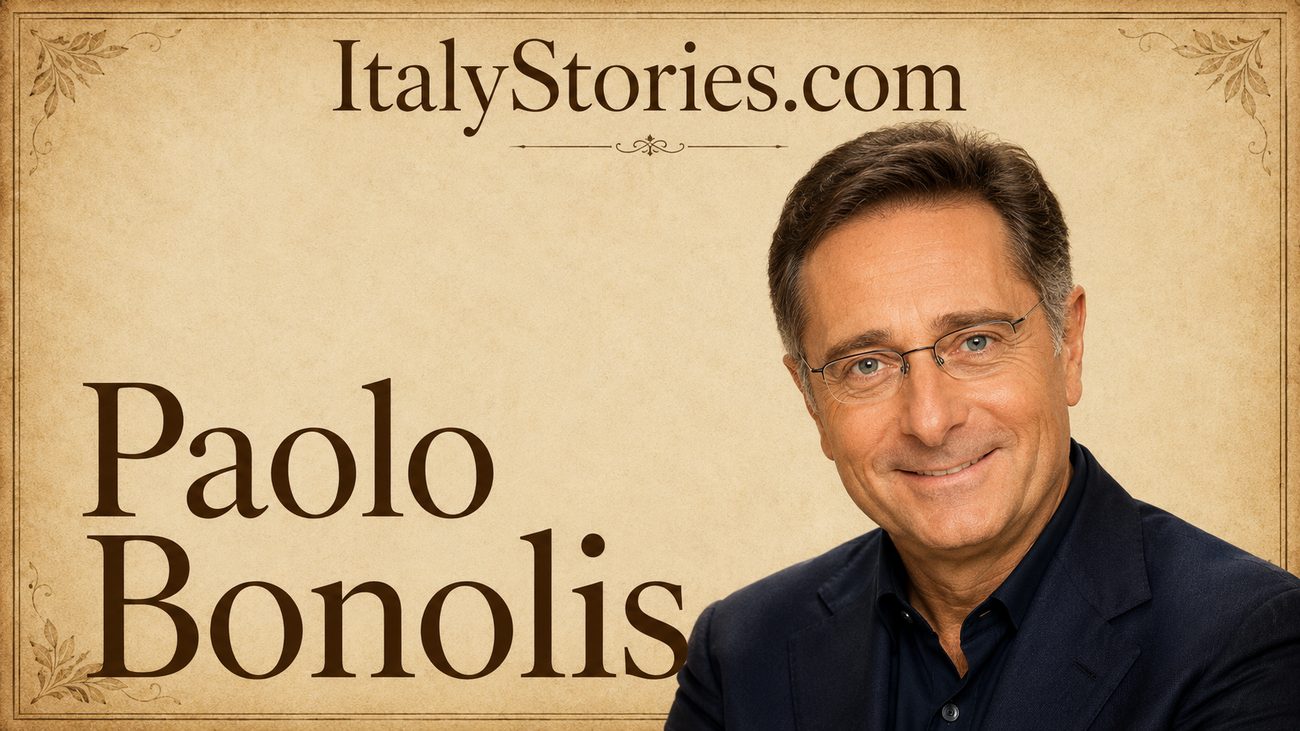
Paolo Bonolis approached Sanremo as a live television athlete. His speed, verbal invention and appetite for the unexpected made his editions feel highly kinetic. Where some hosts seek elegance through restraint, Bonolis seeks control through acceleration. Yet behind the apparent improvisation is strong technical command. He understands timing, audience energy and the mechanics of a major broadcast. His Sanremo contribution proved that the festival could embrace a more muscular entertainment style without losing the centrality of the competition.
Gianni Morandi
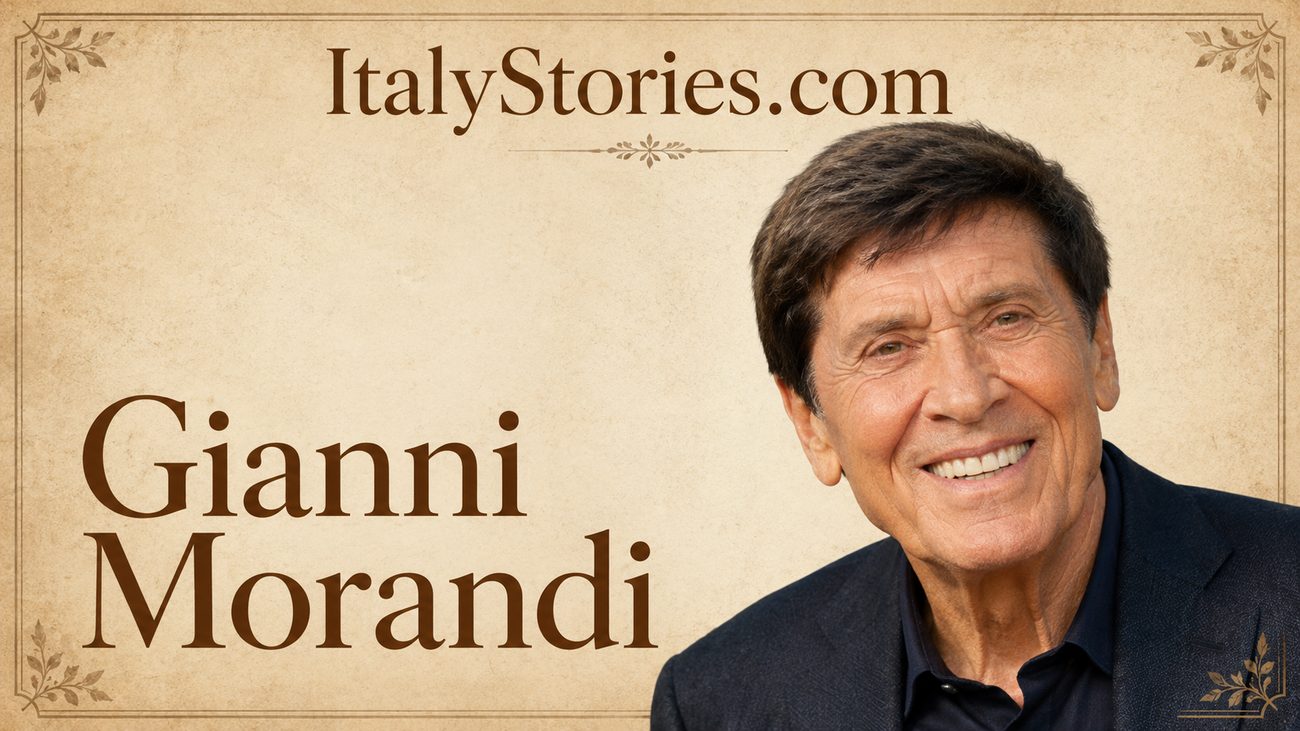
Gianni Morandi brought a unique authority to the hosting role because he already belonged to the festival’s musical history. He did not stand outside the world of Italian song and comment on it; he came from inside it. His warmth, durability and instinctive connection with several generations of viewers made him a natural bridge between heritage and contemporary artists. Morandi’s presence as a host and later as a partner in more recent editions reminds viewers that Sanremo is not only a television institution but a living community of performers.
Amadeus
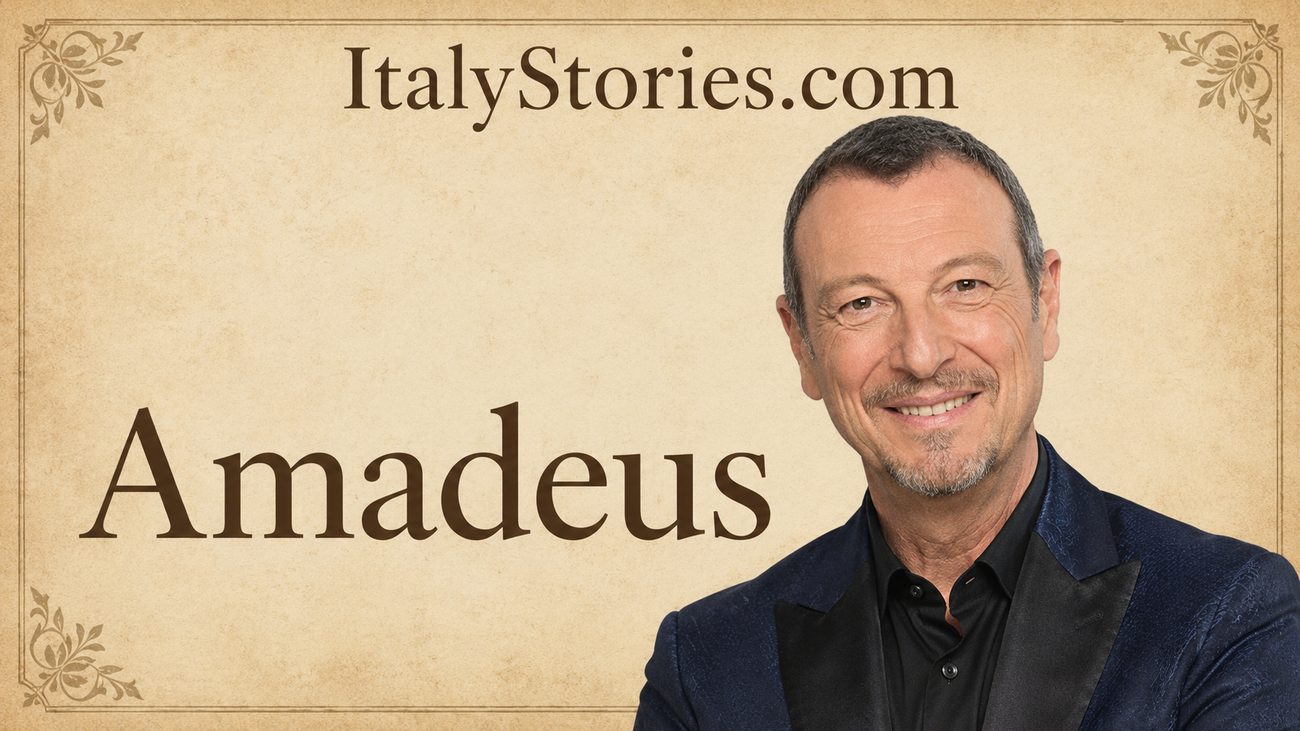
Amadeus reshaped Sanremo in the 2020s by treating current Italian music as the center of the festival rather than an uncomfortable guest. As artistic director and host, he built broad lineups that brought younger listeners back to the event in large numbers. His partnership with Fiorello gave the show humor and unpredictability, while his calm hosting kept the enormous machine functional. The results—Diodato, Måneskin, Mahmood and Blanco, Mengoni, Angelina Mango—speak to the strength of that cycle. Amadeus made Sanremo feel both traditional and unmistakably contemporary.
Enzo Tortora
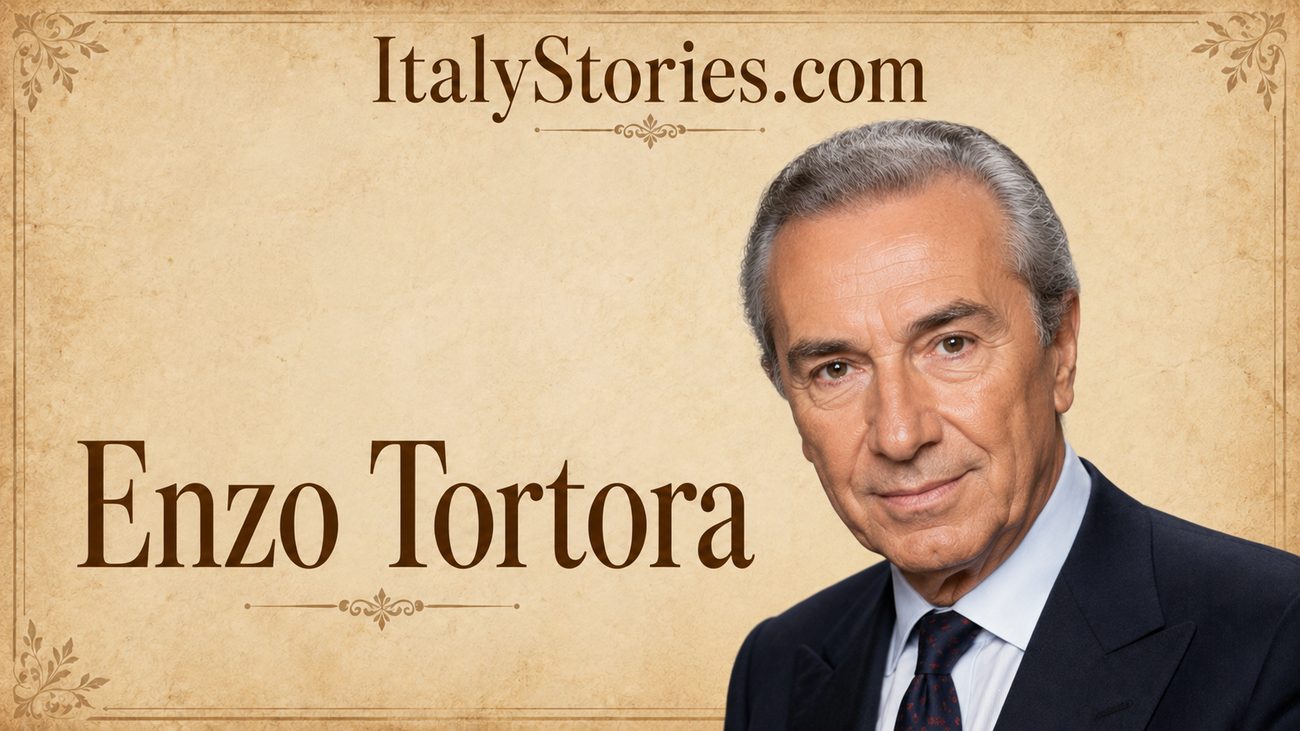
Enzo Tortora belongs to the most intellectually elegant tradition of Italian broadcasting. His Sanremo appearances carried the authority of a journalist and the refinement of a presenter who trusted language. Tortora’s significance in the festival story is larger than the number of editions he hosted: he represents the moment when Sanremo could draw on television figures who brought cultural prestige as well as show-business competence. His measured style offered a reminder that the festival did not need constant noise to command attention.
Loretta Goggi
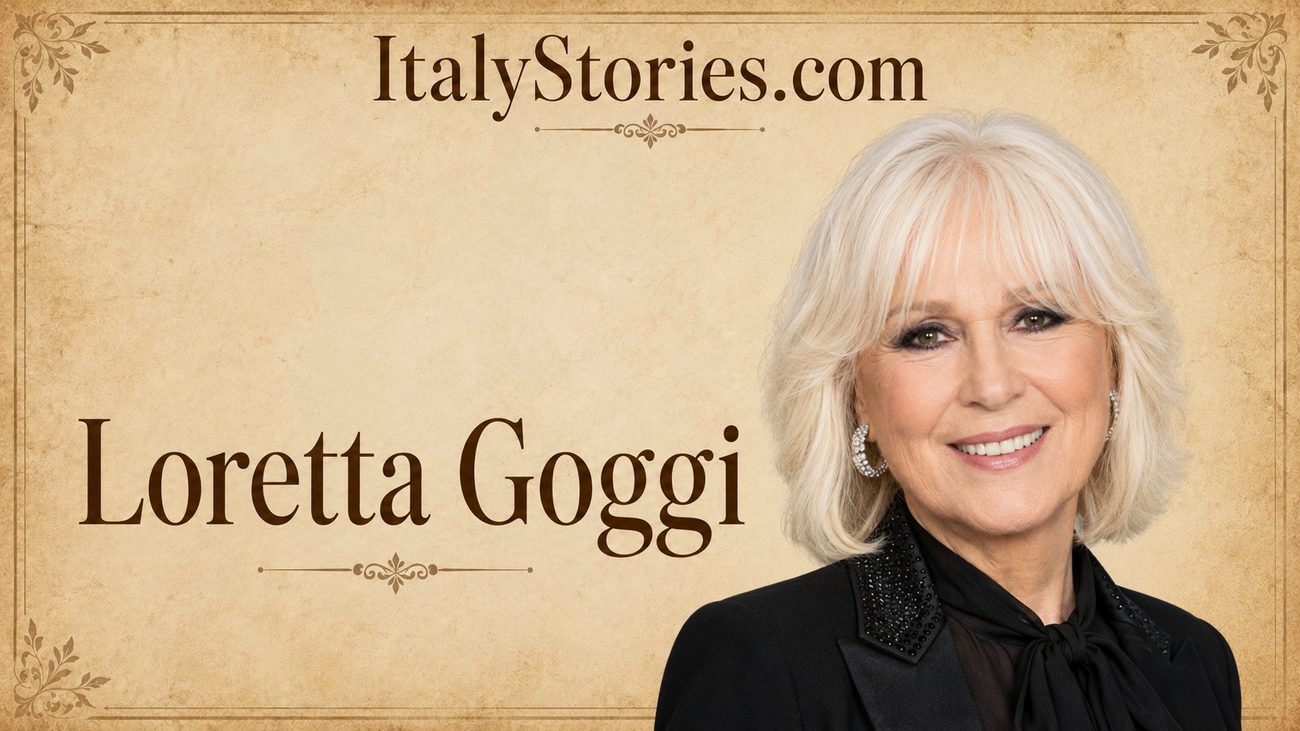
Loretta Goggi’s relationship with Sanremo connects two roles that the festival has always loved: singer and television entertainer. Her own musical history includes “Maledetta primavera,” one of the classic examples of a song becoming far bigger in public memory than its ranking. As a presenter she brought experience, musical understanding and the polished ease of someone at home in live variety. Goggi symbolizes the permeability of Sanremo roles: performers can become hosts, hosts can sing, and the festival’s strongest figures often know the stage from more than one direction.
Antonella Clerici

Antonella Clerici brought Sanremo a style based on warmth rather than distance. She has always excelled at making national television feel domestic, and that quality suited a festival watched in family settings. Her presenting presence offered an alternative to the authoritative male master-of-ceremonies tradition: less hierarchy, more invitation. Clerici’s Sanremo demonstrated that friendliness can be a form of control, and that the host can guide a major live show not by appearing imposing but by making millions of viewers feel personally welcomed.
Carlo Conti
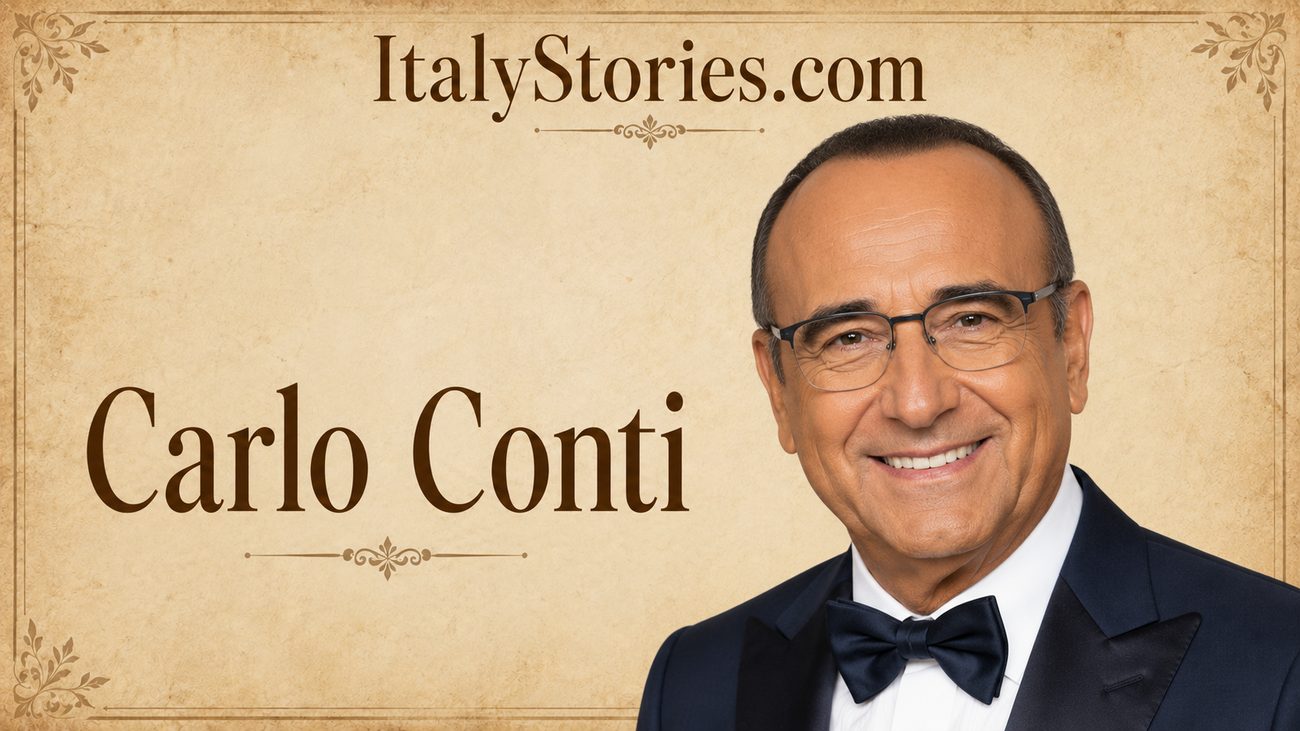
Carlo Conti is the master of clean Sanremo engineering. His style is fast, precise, warm and rarely self-indulgent. He understands that the festival already contains enough drama and does not need the host to manufacture extra confusion. His 2015–2017 run restored clarity and strong popular confidence, and his return in 2025 and 2026 showed how durable that approach is. Conti’s greatest skill is making a very complicated live event look straightforward. In Sanremo terms, that is not simplicity; it is craftsmanship.
Claudio Cecchetto
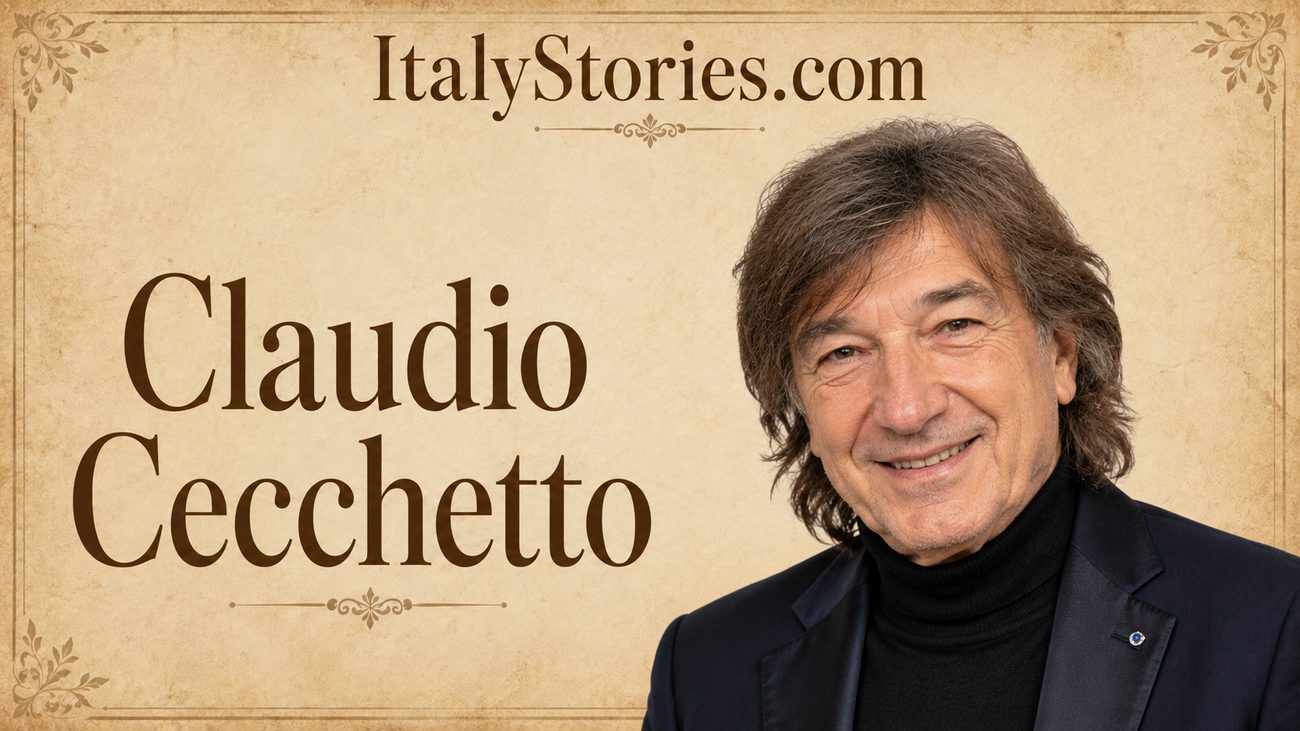
Claudio Cecchetto represents Sanremo’s early attempts to speak more directly to youth culture and the new media language of the 1980s. A radio and television innovator with a strong instinct for popular trends, he brought a less ceremonial energy than the classic hosts. His work belongs to the period in which the festival was rediscovering how to make young performers and new sounds feel central. Cecchetto’s place in the story reminds us that Sanremo’s modernization did not begin with social media; it has been repeatedly trying to catch the next generation for decades.
Simona Ventura
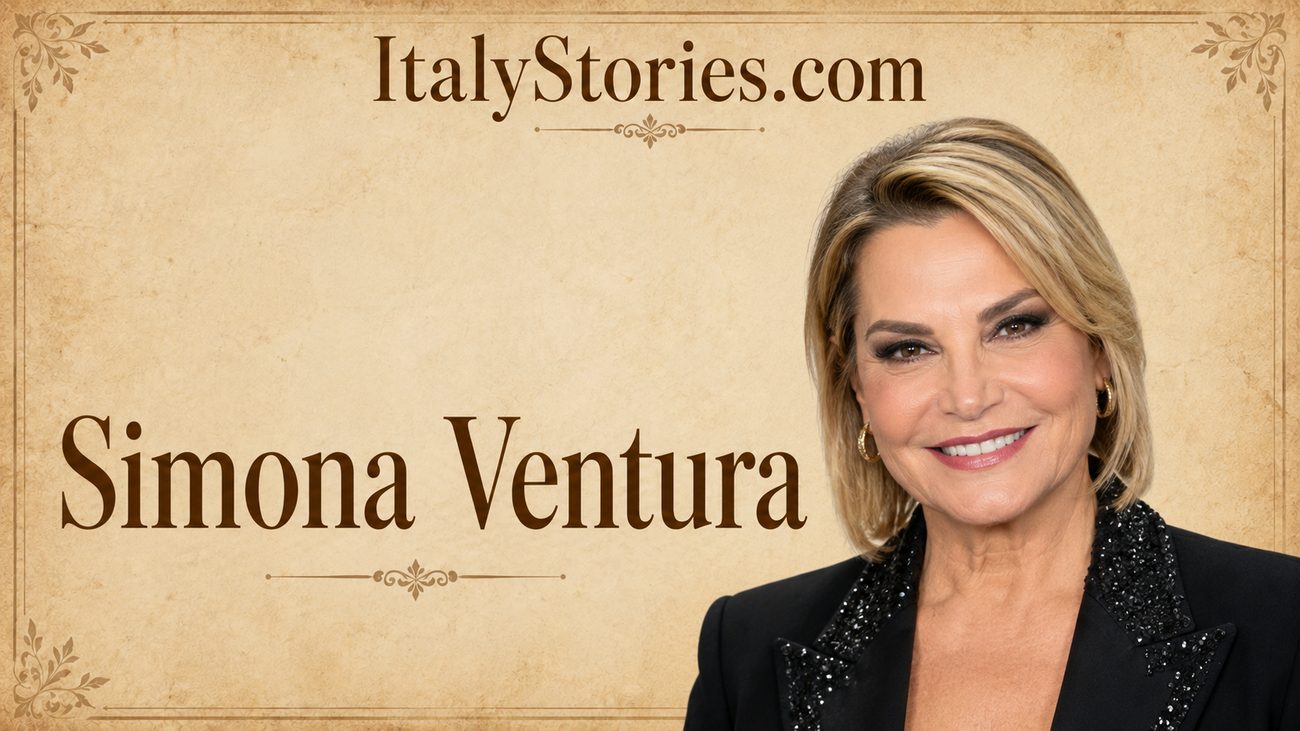
Simona Ventura’s 2004 Sanremo reflected the high-energy celebrity television of the early 2000s. Her style was direct, recognizable and strongly connected to the language of commercial-era Italian entertainment. The edition remains part of a period when Sanremo was experimenting with ways to hold attention in a rapidly changing media environment. Ventura’s presence is important because it demonstrates the festival’s willingness to hand itself to figures with very different television identities and see how the ritual changed around them.
Maria De Filippi
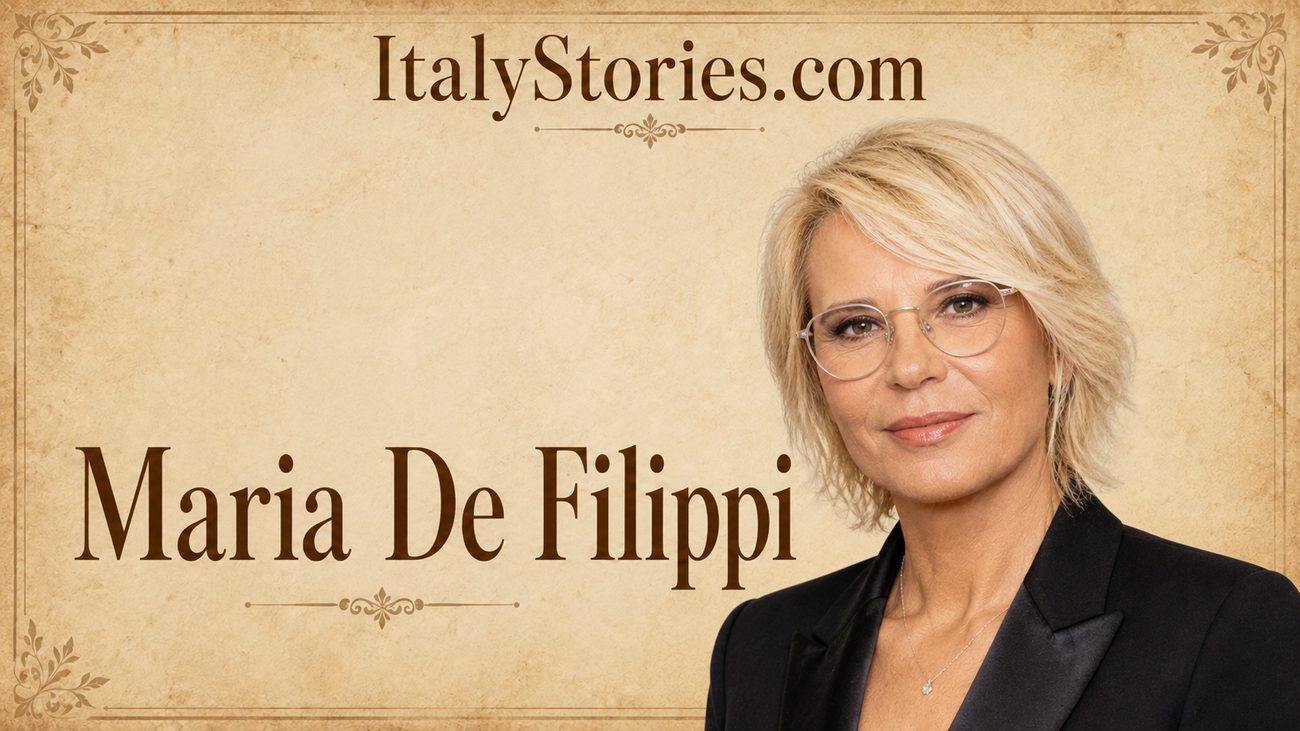
Maria De Filippi’s co-hosting role in 2017 alongside Carlo Conti was symbolically powerful. She represented the television culture of talent discovery, emotional storytelling and long-form audience relationships that had become central to Italian entertainment outside Rai. Bringing her into Sanremo was therefore more than a casting choice; it was a meeting between two powerful national television traditions. Her calm, conversational style contrasted effectively with the festival’s ceremonial side and showed how comfortably Sanremo could absorb a figure from a very different broadcasting ecosystem.
Michelle Hunziker

Michelle Hunziker brought brightness, multilingual international ease and sharp live-television professionalism to Sanremo. Her major co-hosting roles, including the 2018 edition with Claudio Baglioni and Pierfrancesco Favino, showed how the festival increasingly relied on ensembles rather than a single master of ceremonies. Hunziker’s style is light without being careless, polished without feeling distant. She represents the modern co-host who can move between comedy, glamour and serious moments while helping the principal artistic vision remain coherent.
Claudio Baglioni
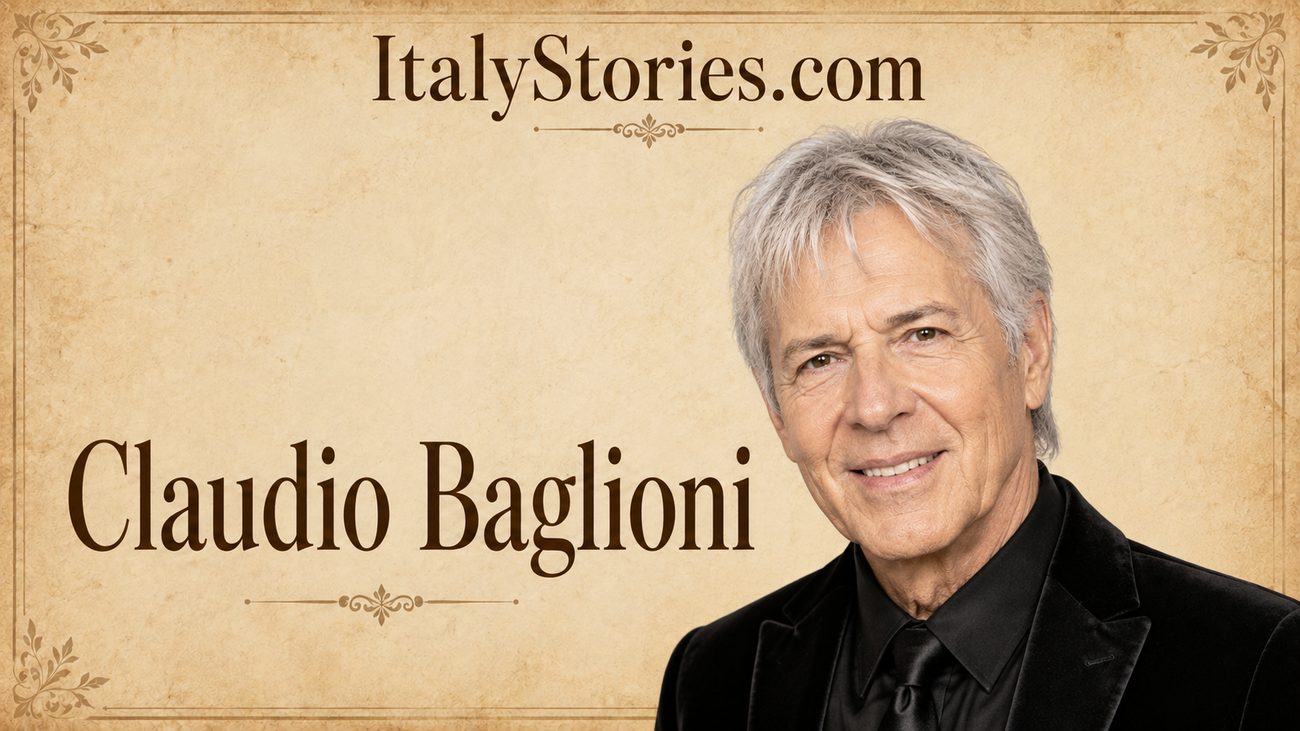
Claudio Baglioni entered Sanremo from the position of a major songwriter rather than a traditional television presenter. As artistic director and host in 2018 and 2019, he emphasized the musical side of the festival and surrounded himself with strong co-hosts. His editions felt different because the person guiding them had spent a lifetime inside songwriting and performance. The 2019 victory of Mahmood with “Soldi” became a particularly significant conclusion to that period, proving that an artist-led Sanremo could still recognize a sound radically different from the host’s own generation.
Fiorello
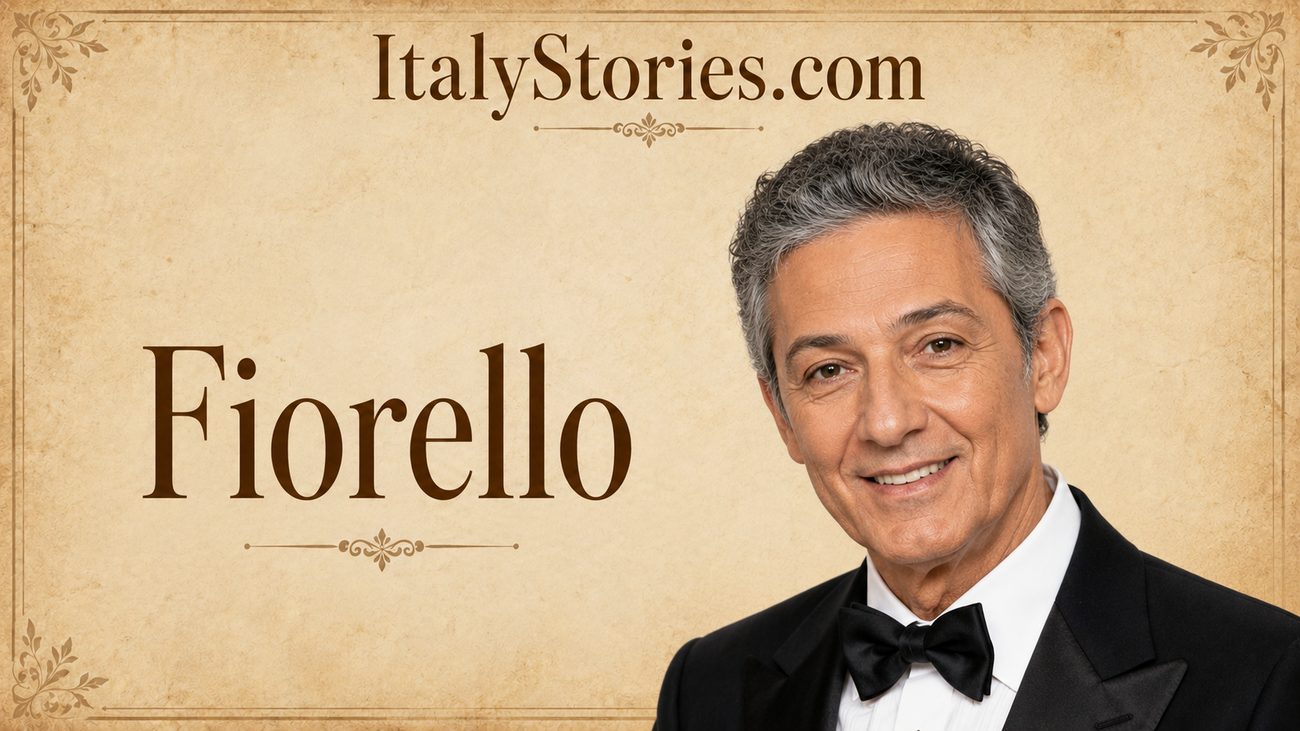
Fiorello was never merely “the funny friend” of the Amadeus years. He became an essential counterweight to the pressure of the modern festival. Musical, comic and unpredictable, he could turn a technical delay or a formal moment into spontaneous entertainment. His long friendship with Amadeus gave their exchanges a natural quality difficult to fake on live television. Fiorello’s importance lies in his ability to remind viewers that Sanremo can be a national ritual without becoming a national obligation. Laughter keeps the machine human.
The singers who made Sanremo larger than its trophy
If Sanremo were only an honors list, it would be much less interesting. The festival’s true history is written by artists who transformed the stage even when the voting did not fully understand them. Nilla Pizzi represents the foundation; Claudio Villa the grandeur of the melodic tradition; Domenico Modugno the moment when Italian song opened its arms to the world. Mina brought a vocal and visual modernity that exceeded the limits of any competition. Adriano Celentano brought physical rebellion and rock-and-roll attitude. Gigliola Cinquetti gave the 1960s a young, instantly recognizable face. Sergio Endrigo showed that careful songwriting could win. Luigi Tenco became the tragic symbol of the cost that public exposure can carry.
In the 1970s and 1980s the cast widened. Iva Zanicchi became one of the great recurring Sanremo figures. Peppino Di Capri connected the festival to a sophisticated Neapolitan-pop tradition. Ricchi e Poveri embodied mass popularity, Al Bano and Romina Power turned the festival into family mythology, and Matia Bazar brought elegant pop experimentation. Toto Cutugno became a symbol of Italian identity abroad, even when his most famous song, “L’italiano,” did not win. Anna Oxa repeatedly reinvented how a Sanremo woman could look and sound. Mia Martini gave the festival some of its deepest emotional moments. Massimo Ranieri’s “Perdere l’amore” became the rare case where a huge victory remained huge in memory. Vasco Rossi and Zucchero showed that finishing far from first place could be irrelevant when artistic identity was strong enough.
The 1990s were extraordinary for voices. Eros Ramazzotti used Sanremo as the beginning of an international pop career. Laura Pausini transformed a newcomer victory into global success. Giorgia proved that pure vocal ability could still create a national event. Andrea Bocelli moved from the young section to worldwide recognition. Mia Martini’s returns became part of the festival’s emotional conscience. Patty Pravo, Loredana Bertè, Enrico Ruggeri, Riccardo Cocciante and Anna Oxa kept proving that mature artists could still use the Ariston as a place of risk rather than mere nostalgia.
The 2000s and 2010s added Elisa, Arisa, Emma, Marco Mengoni, Francesco Renga, Simone Cristicchi, Malika Ayane, Noemi, Annalisa, Il Volo, Francesco Gabbani, Ermal Meta and Fabrizio Moro. These artists came from different musical worlds, which is exactly the point. The modern festival no longer requires one dominant style. It requires a reason to listen. Mahmood’s “Soldi” offered a contemporary autobiographical pop language. Diodato’s “Fai rumore” became emotionally inseparable from the pandemic era. Måneskin used a rock performance to explode the old assumption that Sanremo belonged primarily to ballads. Blanco, Angelina Mango, Olly, Lucio Corsi, Brunori Sas and the new generation show that the festival can still be a place where an artist’s identity becomes much larger overnight.
For international readers, these names are the best way to understand why Sanremo matters. The festival has never been a perfect map of Italian music, but it is an extraordinary crossroads. Many of Italy’s most important popular singers have passed through it, challenged it, lost inside it, won it, returned to it or used it as a stage on which to redefine themselves. The trophy is one story. The careers are the larger one.
Why the rest of the world should care about Sanremo
Outside Italy, Sanremo is sometimes treated as a colorful local tradition, charming but slightly mysterious. That view misses the scale of its cultural influence. The festival helped inspire the model that became Eurovision. It has launched songs and artists with international careers. It has provided a yearly showcase of Italian songwriting, orchestration, stage design, fashion and television production. More importantly, it offers something increasingly rare in modern media: a mass audience gathered around music that has not already become a hit. Viewers hear songs for the first time together and then watch consensus, disagreement and affection form in public.
Sanremo also reveals something essential about Italian culture. Italy is often exported through food, cars, fashion, art and landscape. The festival shows another side: a nation that treats popular song with extraordinary seriousness. Lyrics are discussed, vocal performances compared, arrangements judged, presenters analyzed, clothes remembered, old editions cited like family history. This intensity can be comic, and Italians are usually the first to laugh at it. But beneath the irony lies a real belief that songs matter because they become containers for memory.
The festival’s longevity therefore makes sense. It is not surviving because Italy refuses to change. It is surviving because Italy keeps changing and needs a familiar stage on which to notice the change. Nilla Pizzi, Modugno, Cinquetti, Celentano, Oxa, Ramazzotti, Pausini, Bocelli, Elisa, Mahmood, Måneskin, Mengoni, Angelina Mango, Olly and Sal Da Vinci do not belong to one musical world. They belong to successive Italys. Sanremo is the thread that lets those different Italys speak to one another.
Every February the same ritual begins again. The lights come up, the orchestra prepares, the host announces the next artist and millions of people lean forward, whether they admit it or not. Some songs will be forgotten by summer. One or two may become permanent. The winner will hold the trophy under a shower of confetti and flowers. Then the real competition begins: the much slower competition for a place in memory. Sanremo has been staging that contest since 1951, and after seventy-six editions, it still knows how to make Italy listen.
Twenty Sanremo moments that explain the festival better than a rulebook
NILLA PIZZI AND THE IDEA OF A NATIONAL VOICE. The early festival needed a singer who could embody dignity without distance. Nilla Pizzi did exactly that. Her victories did more than establish a record; they gave the young event a recognizable human image. When later generations look back at the first Sanremo, they do not see an abstract format. They see Pizzi, the orchestra, evening clothes and a country learning to enjoy a shared entertainment ritual again.
MODUGNO OPENS HIS ARMS. The physical memory of “Volare” matters almost as much as the melody. Modugno’s open-arm gesture turned the performance into a visual emblem of postwar Italian confidence. It is a rare moment in which a pose, a song and a national mood appear to line up perfectly. Sanremo has spent decades searching for moments with that level of instant symbolic clarity.
TWENTY-FOUR THOUSAND KISSES AND A CHANGING BODY LANGUAGE. Celentano’s presence in the early 1960s reminded viewers that youth culture was not simply a new sound but a new way of moving. The old singer stood and projected. The new performer bent, twisted, played with posture and treated the body as part of the rhythm. Sanremo became an arena in which generations could see the cultural change rather than merely hear it.
GIGLIOLA CINQUETTI AND THE YOUNG ITALY OF 1964. Cinquetti’s victory was not revolutionary in the same way as Modugno’s, yet it was equally revealing. Her youth, apparent innocence and clear melodic song matched an Italy in transition. She could be reassuring to parents and exciting to teenagers at the same time. Her Eurovision success then proved that this specific Italian image could travel across Europe.
THE WEIGHT OF 1967. The death of Luigi Tenco remains outside the normal language of festival anecdotes. It introduced an unbearable seriousness into an event built on competition and entertainment. Sanremo could never again claim that public judgment was a harmless game. The tragedy became part of the festival’s permanent memory and part of Italy’s wider reflection on artists, pressure and vulnerability.
THE ARISTON BECOMES A NATIONAL ADDRESS. When the festival moved to the Teatro Ariston in 1977, a building became a symbol. The entrance and neon sign now function almost like a national landmark in February. Thousands of viewers who have never visited the Ligurian coast can recognize the façade instantly. The theater gave modern Sanremo a physical home and television gave that home to the entire country.
VASCO ROSSI LOSES AND WINS ANYWAY. Vasco’s Sanremo experiences are among the best arguments against treating the ranking as history. “Vita spericolata” did not win, yet it became one of the defining songs of his career and of Italian rock culture. Sanremo’s paradox is that failure on Saturday night can become triumph over forty years. The festival stages the immediate verdict; culture supplies the appeal.
MIA MARTINI RETURNS. Mia Martini’s Sanremo story is inseparable from the respect she gradually regained in the public sphere after years marked by cruel superstition and professional exclusion. Her performances carried a weight beyond competition. When she sang at the Ariston, the festival became a place not of discovery but of recognition: a country being reminded of an artist it should never have stopped valuing.
EROS RAMAZZOTTI AND THE NEWCOMERS’ DREAM. Ramazzotti’s route from the young section to overall victory is the perfect Sanremo career narrative. A young singer arrives, the public notices, the industry responds, and a second appearance confirms that the first was no accident. The later international success makes the story even stronger. It is the dream the newcomers’ section has been selling ever since.
LAURA PAUSINI AND THE POWER OF ONE SONG. “La solitudine” demonstrates how quickly a song can become biographical for millions of listeners. The lyric tells a specific adolescent story, yet the feeling is universal enough to travel. Pausini’s victory showed Sanremo at its most effective: not manufacturing a star, but recognizing a voice and a song at exactly the moment they were ready for a national audience.
GIORGIA AND THE AUTHORITY OF THE VOICE. Giorgia’s rapid rise through Sanremo confirmed that technical vocal talent could still stop a giant television machine in its tracks. Her performances were not simply impressive; they changed expectations about what a modern Italian pop singer could do live. Sanremo often talks about spectacle, but moments like Giorgia’s remind everyone that a microphone and a voice can remain the most powerful spectacle available.
ANDREA BOCELLI CROSSES WORLDS. Bocelli’s early Sanremo success showed the festival’s capacity to connect popular television with a more classically inflected vocal tradition. His subsequent international career would take him far beyond the format, but the Ariston appearance remains part of the origin story. Sanremo can be provincial and global at the same time, and Bocelli is one of the clearest examples.
ELISA AND A MODERN ARTISTIC VICTORY. When Elisa won in 2001 with “Luce,” the result felt artistically important because it contradicted the lazy idea that Sanremo could reward only safe, conventional material. The song’s melodic strength coexisted with a distinctive artistic identity. It became one of those victories that critics and the wider public can look back on without needing to apologize for the taste of the moment.
THE FESTIVAL LEARNS SOCIAL MEDIA. Sanremo did not need to invent a new personality for the social-media age. It simply needed to discover that its old personality was ideal for constant commentary. The long nights, fashion choices, voting drama, unexpected duets and emotional reactions translate perfectly into clips and memes. What changed was not the Italian urge to comment; only the speed and visibility of the commentary.
MAHMOOD CHANGES THE CENTER. The 2019 victory of “Soldi” mattered because the song did not feel like an outsider being tolerated by an old institution. It felt like the institution recognizing that Italian pop had changed. The language, rhythm, family story and urban identity of the song belonged fully to the present. Sanremo’s ability to award it first place was evidence of genuine adaptation rather than cosmetic modernization.
AN EMPTY ARISTON. The 2021 festival without a normal audience created one of the strangest images in Sanremo history. The theater, usually charged with physical reaction, suddenly looked like a stage suspended outside ordinary time. And yet the show continued. The emotional significance was not that television had defeated the pandemic, but that a ritual could be maintained during national disruption without pretending that everything was normal.
MÅNESKIN AND THE GLOBAL AFTERSHOCK. Måneskin’s victory turned Sanremo into the first act of a global story. Their later Eurovision win and international success made the Ariston seem, briefly, like the center of world pop-rock attention. The episode was especially satisfying because it overturned an old stereotype: that Sanremo could not truly belong to loud guitars, provocative image and contemporary international ambition.
MARCO MENGONI, TEN YEARS LATER. Mengoni’s victories in 2013 and 2023 bookend a decade of artistic growth. The first confirmed him as a major modern pop singer; the second presented a more mature performer with deeper command of stage and song. Sanremo loves return narratives because they let the public measure time. The singer changes, the audience changes, the theater remains.
ANGELINA MANGO AND INHERITED MEMORY. Angelina Mango’s 2024 victory carried the unavoidable echo of family musical history, yet her performance and identity were clearly her own. That balance—memory without imprisonment by memory—fits Sanremo perfectly. The festival itself survives by doing the same thing every year: carrying the weight of its past while trying to sound like the present.
OLLY, SAL DA VINCI AND THE OPEN FUTURE. The victories of 2025 and 2026 underline how little Sanremo now needs a single stylistic formula. Olly’s youthful songwriter pop and Sal Da Vinci’s mature melodic identity represent different corners of Italian music. The festival can move from one to the other because the real continuity lies elsewhere: in the stage, the national attention and the annual act of listening together.
Sanremo winners: 1951–2026
The following archive lists the winner of the main competition for every edition from the inaugural 1951 festival through the 76th edition in 2026. In the early years the same song was often performed by two different artists, which is why multiple names appear beside many winning titles.
| Year | Winner | Song |
|---|---|---|
| 1951 | Nilla Pizzi | Grazie dei fiori |
| 1952 | Nilla Pizzi | Vola colomba |
| 1953 | Carla Boni & Flo Sandon’s | Viale d’autunno |
| 1954 | Giorgio Consolini & Gino Latilla | Tutte le mamme |
| 1955 | Claudio Villa & Tullio Pane | Buongiorno tristezza |
| 1956 | Franca Raimondi | Aprite le finestre |
| 1957 | Claudio Villa & Nunzio Gallo | Corde della mia chitarra |
| 1958 | Domenico Modugno & Johnny Dorelli | Nel blu dipinto di blu |
| 1959 | Domenico Modugno & Johnny Dorelli | Piove (Ciao ciao bambina) |
| 1960 | Tony Dallara & Renato Rascel | Romantica |
| 1961 | Betty Curtis & Luciano Tajoli | Al di là |
| 1962 | Domenico Modugno & Claudio Villa | Addio… addio |
| 1963 | Tony Renis & Emilio Pericoli | Uno per tutte |
| 1964 | Gigliola Cinquetti & Patricia Carli | Non ho l’età (per amarti) |
| 1965 | Bobby Solo & The New Christy Minstrels | Se piangi se ridi |
| 1966 | Domenico Modugno & Gigliola Cinquetti | Dio come ti amo |
| 1967 | Claudio Villa & Iva Zanicchi | Non pensare a me |
| 1968 | Sergio Endrigo & Roberto Carlos | Canzone per te |
| 1969 | Bobby Solo & Iva Zanicchi | Zingara |
| 1970 | Adriano Celentano & Claudia Mori | Chi non lavora non fa l’amore |
| 1971 | Nada & Nicola Di Bari | Il cuore è uno zingaro |
| 1972 | Nicola Di Bari | I giorni dell’arcobaleno |
| 1973 | Peppino Di Capri | Un grande amore e niente più |
| 1974 | Iva Zanicchi | Ciao cara, come stai? |
| 1975 | Gilda | Ragazza del Sud |
| 1976 | Peppino Di Capri | Non lo faccio più |
| 1977 | Homo Sapiens | Bella da morire |
| 1978 | Matia Bazar | …e dirsi ciao! |
| 1979 | Mino Vergnaghi | Amare |
| 1980 | Toto Cutugno | Solo noi |
| 1981 | Alice | Per Elisa |
| 1982 | Riccardo Fogli | Storie di tutti i giorni |
| 1983 | Tiziana Rivale | Sarà quel che sarà |
| 1984 | Al Bano & Romina Power | Ci sarà |
| 1985 | Ricchi e Poveri | Se m’innamoro |
| 1986 | Eros Ramazzotti | Adesso tu |
| 1987 | Gianni Morandi, Enrico Ruggeri & Umberto Tozzi | Si può dare di più |
| 1988 | Massimo Ranieri | Perdere l’amore |
| 1989 | Anna Oxa & Fausto Leali | Ti lascerò |
| 1990 | Pooh | Uomini soli |
| 1991 | Riccardo Cocciante | Se stiamo insieme |
| 1992 | Luca Barbarossa | Portami a ballare |
| 1993 | Enrico Ruggeri | Mistero |
| 1994 | Aleandro Baldi | Passerà |
| 1995 | Giorgia | Come saprei |
| 1996 | Ron & Tosca | Vorrei incontrarti fra cent’anni |
| 1997 | Jalisse | Fiumi di parole |
| 1998 | Annalisa Minetti | Senza te o con te |
| 1999 | Anna Oxa | Senza pietà |
| 2000 | Avion Travel | Sentimento |
| 2001 | Elisa | Luce (Tramonti a nord est) |
| 2002 | Matia Bazar | Messaggio d’amore |
| 2003 | Alexia | Per dire di no |
| 2004 | Marco Masini | L’uomo volante |
| 2005 | Francesco Renga | Angelo |
| 2006 | Povia | Vorrei avere il becco |
| 2007 | Simone Cristicchi | Ti regalerò una rosa |
| 2008 | Giò Di Tonno & Lola Ponce | Colpo di fulmine |
| 2009 | Marco Carta | La forza mia |
| 2010 | Valerio Scanu | Per tutte le volte che… |
| 2011 | Roberto Vecchioni | Chiamami ancora amore |
| 2012 | Emma | Non è l’inferno |
| 2013 | Marco Mengoni | L’essenziale |
| 2014 | Arisa | Controvento |
| 2015 | Il Volo | Grande amore |
| 2016 | Stadio | Un giorno mi dirai |
| 2017 | Francesco Gabbani | Occidentali’s Karma |
| 2018 | Ermal Meta & Fabrizio Moro | Non mi avete fatto niente |
| 2019 | Mahmood | Soldi |
| 2020 | Diodato | Fai rumore |
| 2021 | Måneskin | Zitti e buoni |
| 2022 | Mahmood & Blanco | Brividi |
| 2023 | Marco Mengoni | Due vite |
| 2024 | Angelina Mango | La noia |
| 2025 | Olly | Balorda nostalgia |
| 2026 | Sal Da Vinci | Per sempre sì |
Keep exploring Italian culture
Follow ItalyStories.com for more long-form stories about Italian history, culture, music, design, traditions and the people who made Italy unforgettable.